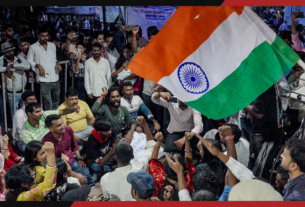
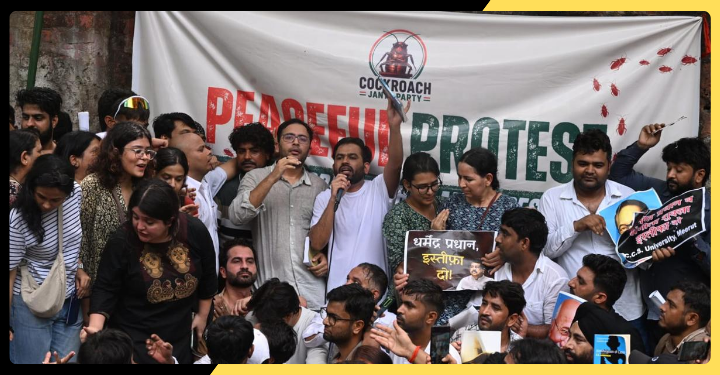
Jantar Mantar, one of India’s most recognized venues for public demonstrations, became the center of attention as students and young activists gathered for a major protest organized by the Cockroach Janta Party. The event drew participants from various educational institutions, youth groups, and social organizations, highlighting the growing role of young people in civic and political discussions. The protest gained additional momentum with the participation of social activist Abhijeet Dipke, who joined demonstrators and addressed the gathering.
The protest began with a steady influx of students arriving at the venue carrying banners and placards. The messages displayed focused on a range of concerns, including educational reforms, employment opportunities, public accountability, and youth representation in policymaking. Organizers described the demonstration as a peaceful effort to amplify the voices of young citizens and encourage dialogue on issues affecting their future.
As the crowd expanded throughout the day, the atmosphere at Jantar Mantar reflected a mix of determination, enthusiasm, and solidarity. Groups of students gathered to discuss their concerns while volunteers coordinated activities and ensured the smooth functioning of the event. Chants and slogans echoed across the venue, creating an environment that emphasized collective participation and democratic engagement.
One of the major highlights of the protest was the arrival of Abhijeet Dipke. His presence attracted considerable attention among participants and supporters. Upon reaching the venue, Dipke interacted with students, listened to their concerns, and expressed support for peaceful democratic expression. Protesters welcomed him with applause and slogans, viewing his participation as a positive reinforcement of their movement.
Addressing the gathering, Dipke spoke about the importance of youth involvement in public affairs. He emphasized that students and young professionals represent the future of the nation and should play an active role in discussions related to governance and policy. According to him, democracy thrives when citizens participate constructively and make their voices heard through peaceful means.
Dipke also highlighted the significance of dialogue and engagement in addressing social challenges. He encouraged students to remain informed about public issues and continue advocating for change through lawful and democratic channels. His speech received positive responses from attendees, many of whom said they felt inspired by his message of civic responsibility.
Throughout the day, several student leaders and youth representatives addressed the crowd. Their speeches focused on concerns that many young people encounter, including access to quality education, skill development opportunities, and employment prospects. Speakers argued that youth perspectives should be included more prominently in policy discussions and public decision-making processes.
The protest remained peaceful and organized despite the large turnout. Volunteers played a crucial role in crowd management, distributing information, guiding participants, and ensuring that activities proceeded according to plan. Organizers repeatedly emphasized the need for discipline and cooperation, encouraging attendees to maintain the non-violent nature of the demonstration.
Beyond the physical gathering, the protest generated substantial activity online. Social media platforms became a hub for updates, photographs, videos, and commentary related to the event. Supporters shared key moments from speeches and discussions, helping the movement reach audiences across different regions. Hashtags associated with the protest gained visibility as users engaged in conversations about the issues raised by participants.
Observers noted that the event reflected a broader trend of increasing youth engagement in public affairs. Across the country, students and young professionals are becoming more active in discussions related to governance, education, and social policy. Such demonstrations provide opportunities for individuals to express concerns collectively and draw attention to matters they believe deserve public consideration.
Participants expressed differing motivations for joining the protest, but many shared a common belief that young people should have a stronger role in shaping the future of the nation. Some viewed the gathering as a platform to raise awareness, while others saw it as an opportunity to connect with fellow citizens who share similar aspirations and concerns.
As the day progressed, discussions continued on a variety of topics affecting youth and society. Speakers encouraged attendees to remain engaged beyond the protest and continue contributing to public discourse through community involvement, dialogue, and democratic participation.
By evening, organizers described the event as a successful demonstration of youth unity and civic engagement. They thanked participants, volunteers, and supporters for contributing to a peaceful and impactful gathering. Many attendees left with a sense of optimism, believing that collective action can help bring greater attention to important issues.
The Cockroach Janta Party protest at Jantar Mantar highlighted the growing influence of youth activism in contemporary India. With students taking center stage and supporters like Abhijeet Dipke lending their voices to the cause, the event underscored the importance of public participation in a democratic society. While the ultimate impact of the protest will depend on future developments, the gathering succeeded in drawing attention to concerns that many young citizens consider vital to their future.