The Supreme Court’s proceedings over alleged police excesses during student protests could potentially lead to wider national standards for the management of public demonstrations. The case has emerged from allegations of excessive police force during protests over examination-related issues, but the questions being considered by the court have implications for protests across India.
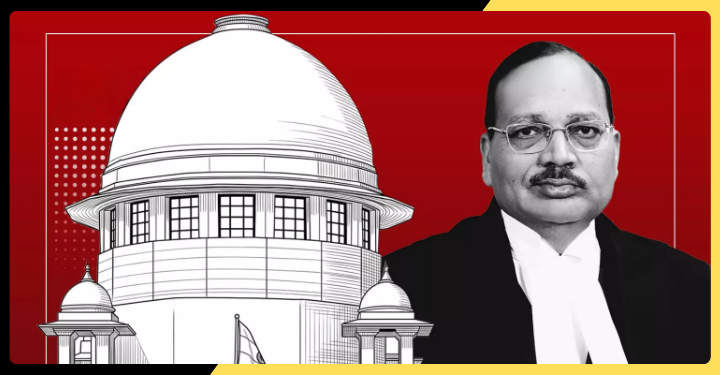
The central issue is whether police authorities can use force simply because a group of citizens is engaged in an agitation. Chief Justice Surya Kant has made it clear that peaceful and lawful protest is constitutionally protected and that mere agitation cannot automatically justify a lathi-charge.
This principle could have far-reaching consequences. India regularly witnesses protests over education, employment, land, government policies and social issues. In many cases, protests are peaceful at the beginning but may become tense when crowds move beyond designated areas or when authorities attempt to disperse them.
The court’s approach suggests that authorities must carefully evaluate the situation before using force. A peaceful gathering, a crowd violating restrictions and a violent mob may require different responses.
The need for uniform protocols becomes particularly important in this context. Police forces across the country may require clear guidance on how to communicate with protesters, how to issue warnings and how to gradually escalate responses if necessary.
Such guidelines could also include requirements for documentation. Modern protests are often recorded on mobile phones, CCTV systems and body cameras. Preserving this evidence could help establish what actually happened during a confrontation.
Independent investigations may also become an important part of the framework. If protesters allege excessive force, the investigation should not depend solely on the police department involved. An independent process could improve public confidence.
However, the court has also recognised that police personnel can face serious risks. The bench’s concern about injuries to officers and the availability of protective equipment shows that crowd-control policy must protect everyone.
The larger challenge is to ensure that public order is maintained without undermining democratic rights. A protest cannot become a licence for violence, but the presence of a protest cannot become a licence for indiscriminate force either.
The Supreme Court’s observations reflect this balance. The court has emphasised self-discipline by protesters and police personnel alike. This means that both sides must act responsibly.
The case could eventually produce a framework that affects how future demonstrations are managed. If nationwide guidelines are issued, they may provide greater clarity regarding the use of force, negotiation, warnings, medical assistance and accountability.
For students, the issue is especially significant because examination controversies can affect millions of young people. Their demand for answers must be heard, but demonstrations must remain peaceful.
The Jantar Mantar case has therefore moved beyond a single protest. It now raises a national question about the limits of state power and the responsibilities of citizens.
The final legal outcome will be closely watched because it could influence the future relationship between protest movements and law enforcement agencies throughout India.