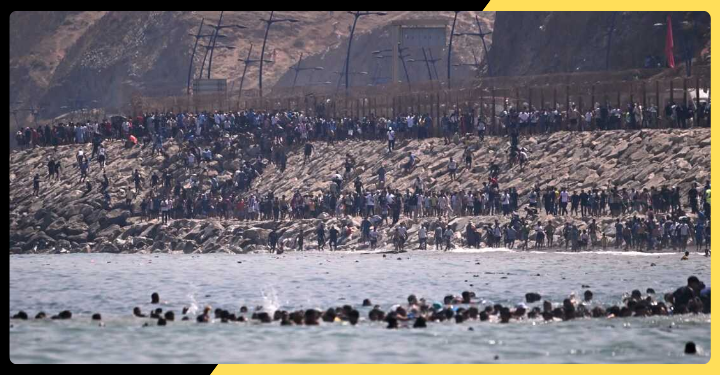
The deadly border incident near Ceuta sparked widespread concern among humanitarian organizations, international institutions, and human rights advocates. While governments focused on border security and migration control, many organizations highlighted the human cost of the crisis and called for greater protection of migrants attempting to reach Europe.
At the center of the debate is the question of how countries should respond when people cross borders irregularly while also facing difficult personal circumstances. Many migrants involved in attempts to enter Spain are not simply seeking economic opportunities; some are escaping conflict, political instability, persecution, or extreme poverty. Human rights groups argue that every person arriving at a border has the right to be treated with dignity and that authorities must respect international laws protecting refugees and asylum seekers.
Following the deaths during the border attempt, humanitarian organizations called for a thorough investigation into what happened. They demanded clarity about the events leading to the casualties, including how security forces responded and whether appropriate measures were taken to prevent deaths and serious injuries.
The incident also raised questions about the use of force during border control operations. Security officials argue that they must manage large groups attempting to enter restricted areas, sometimes under dangerous and chaotic conditions. However, critics argue that authorities must ensure that crowd-control methods do not put vulnerable people at unnecessary risk.
One of the biggest concerns raised by human rights groups is the treatment of migrants after failed border crossings. Organizations have criticized practices involving the rapid return of migrants to neighboring countries without proper assessment of their individual situations. They argue that people seeking protection should have access to fair procedures where their circumstances can be examined.
The situation is particularly complicated because Morocco is both a partner in European migration management and a country where many migrants remain while trying to reach Europe. International organizations have urged Morocco and Spain to ensure that migration policies respect basic human rights standards.
The tragedy also drew attention from European institutions. European leaders expressed concern about the loss of life while emphasizing the importance of cooperation between Spain, Morocco, and other countries. The European Union has repeatedly stated that migration requires a coordinated response because individual countries cannot manage the challenge alone.
However, European migration policy remains highly debated. Some countries support stronger border controls and increased cooperation with transit countries to reduce irregular arrivals. Others argue that Europe must create more legal migration pathways and improve systems for people seeking asylum.
Humanitarian organizations often point out that restricting migration routes does not necessarily stop people from moving. Instead, they argue, it can force migrants to take more dangerous paths. When legal options are limited, people may rely more heavily on smugglers, increasing the risk of exploitation, violence, and death.
The role of migrant smuggling networks has become another major concern. Criminal groups often take advantage of people’s desperation by charging high fees for transportation and making unrealistic promises about reaching Europe. Many migrants discover that the journey is far more dangerous than they expected.
International reactions also focused on the need to address the root causes of migration. Aid organizations and experts have emphasized that long-term solutions must include economic development, conflict prevention, education, healthcare improvements, and job creation in countries where many migrants originate.
Climate change has also become an increasingly important factor in migration discussions. Rising temperatures, droughts, and environmental damage are affecting communities that depend on farming and natural resources. Although climate-related migration is complex, experts warn that environmental pressures may contribute to future migration movements.
The deaths at the Morocco–Spain border became a symbol of a larger global challenge. Around the world, countries are struggling to balance national security concerns with humanitarian responsibilities. Border protection remains a legitimate concern for governments, but human rights organizations argue that security policies must not ignore the lives and safety of migrants.
The debate surrounding Ceuta reflects a broader question facing Europe: how can countries manage migration in a way that is secure, fair, and humane? There is no simple solution. Effective policies will likely require cooperation between governments, international organizations, and communities while addressing both immediate border challenges and the deeper reasons why people leave their homes.
The tragedy serves as a reminder that behind every migration statistic are individuals with personal stories, families, and hopes for a better future. Understanding the human side of migration is essential for creating policies that protect both borders and human lives.