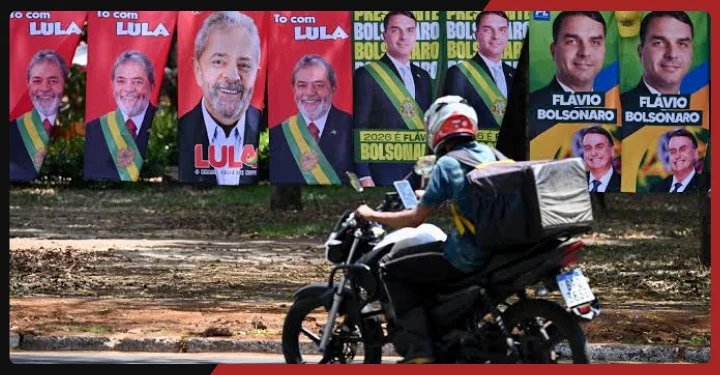
Brazil’s presidential election appears headed for a second round after projections showed Jair Bolsonaro failing to maintain a comfortable lead over his main rival.
The narrowing gap has changed the political outlook and ensured that Brazil’s next president may not be decided in the first round.
Bolsonaro remains a central figure in Brazilian politics. His conservative movement has maintained considerable influence, and his campaign entered the election with a strong base of supporters.
However, the election has demonstrated that his support is not enough to guarantee an immediate victory.
The possibility of a runoff reflects the divided nature of Brazil’s electorate. Voters remain split over political ideology, economic priorities, social issues and the country’s future direction.
A second round would give voters a direct choice between the two leading candidates.
That creates both opportunities and risks.
Bolsonaro would have to expand his coalition beyond his traditional supporters. His campaign would likely focus on consolidating conservative voters while attempting to persuade moderates and supporters of defeated candidates.
His opponent would face the same challenge.
The ability to build a broader electoral coalition will become crucial. First-round results alone do not determine who will win the presidency because supporters of eliminated candidates can play a decisive role in the runoff.
Economic issues are expected to feature prominently in the next phase. Brazilian voters are concerned about the cost of living, jobs, wages, government spending and economic growth.
Political leaders will need to convince voters that their economic programs can deliver tangible improvements.
Security will remain another major issue. Brazil faces persistent concerns about organized crime and violence, and presidential candidates have traditionally placed public safety high on their agendas.
Environmental policy may also attract international attention. Brazil’s importance to global climate policy makes the presidential election significant beyond its borders.
The Amazon rainforest, agricultural development and environmental enforcement could all become topics of debate.
The next government will also shape Brazil’s international relationships. The country is an important regional power and a major participant in global diplomatic and economic forums.
Financial markets are likely to monitor developments closely. Investors will seek greater clarity about fiscal policies, government spending and the regulatory environment.
But before the runoff campaign begins, the official first-round results must be confirmed.
Election projections can change as additional votes are counted. The narrowing Bolsonaro lead demonstrates that early figures do not necessarily reflect the final outcome.
For Bolsonaro’s supporters, the result may still represent a strong performance if he finishes first. But failing to secure an outright victory means the campaign must prepare for a very different political contest.
For his challenger, the prospect of a runoff creates an opportunity to reset the race.
The coming period could see negotiations between political parties, public endorsements and efforts to win over undecided voters.
The election is therefore entering a new phase rather than reaching its conclusion.
Brazilian voters have delivered a closely divided result so far, and the final decision may require another trip to the ballot box.
The narrowing margin between the leading candidates has ensured that the presidential race remains unpredictable.