
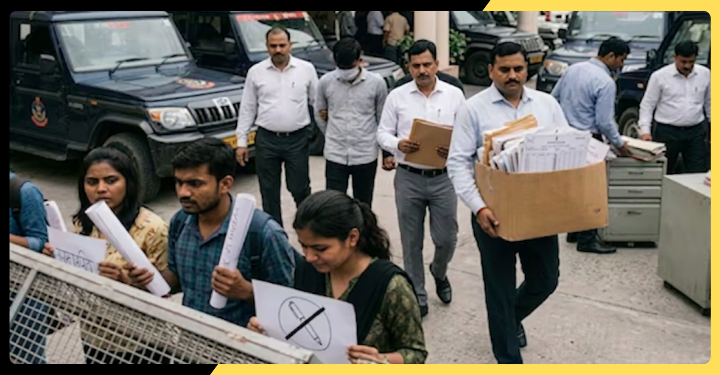
The alleged paper leak in NEET UG 2026 has become more controversial after investigators revealed that one accused allegedly purchased the examination paper for his son, who had passed Class 12 with grace marks. The incident has sparked nationwide discussions about academic pressure, corruption, and the credibility of competitive examinations.
Officials said the accused father reportedly paid intermediaries who promised access to the question paper before the exam. Authorities suspect the operation was linked to a larger organized network involved in examination fraud.
Investigators claim the student struggled academically during school and managed to pass the board examinations only after receiving grace marks. Police believe the family feared the student would fail to secure admission to a medical college through merit alone.
The case has triggered outrage among students and parents nationwide. Many aspirants dedicate years to NEET preparation, attending coaching classes and following strict study routines. Honest candidates now fear their efforts may be undermined by organized cheating networks.
Cybercrime experts assisting the investigation are examining mobile devices, financial records, and communication logs. Officials suspect encrypted messaging platforms may have been used to circulate leaked papers discreetly.
Education analysts argue that the pressure to enter prestigious professions such as medicine has intensified dramatically over the years. In some cases, unrealistic parental expectations can drive unethical choices.
The scandal has also exposed vulnerabilities in examination security systems. Experts say paper printing, transportation, and storage processes remain vulnerable to manipulation if oversight mechanisms are weak.
Political leaders reacted strongly after details of the investigation emerged. Opposition parties accused authorities of administrative failures, while government representatives assured that strict legal action would be taken against all involved.
Student groups demanded transparency regarding the scope of the leak and urged authorities not to punish genuine aspirants. Some organizations have called for independent monitoring of future examinations.
Legal experts note that examination fraud cases can result in imprisonment, fines, and permanent disqualification from future competitive exams. Students found knowingly participating in such schemes may face severe academic consequences.
Meanwhile, education reform advocates continue to push for stronger technological safeguards, including encrypted digital question papers and AI-based monitoring systems.
The NEET controversy has once again highlighted the need for broader reforms in India’s education system. Experts argue that reducing excessive pressure and creating more career opportunities beyond medicine and engineering could help decrease desperation among students and parents.
As investigators continue to uncover details, the nation remains focused on whether authorities can restore public confidence in one of India’s most important entrance examinations.