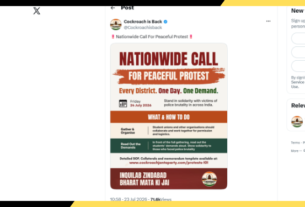
The satirical social media account “Cockroach Janata Party” has become the latest flashpoint in India’s ongoing debate over free speech and online censorship after its founder claimed the account was blocked on X for Indian users. The restriction has triggered widespread reactions across digital platforms, with supporters calling it an attack on satire and critics defending tighter moderation of political content.
The parody account rose to prominence through humorous posts mocking political events, campaign slogans, and public controversies. Using memes, edited graphics, and sarcastic commentary, the page developed a strong following among young internet users who viewed it as a fresh voice in political discourse. Several of its posts frequently went viral, drawing both praise and criticism.
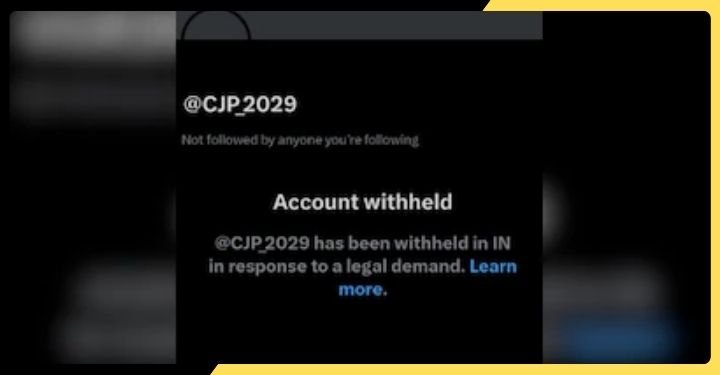
The controversy erupted after Indian users attempting to access the account reportedly encountered a message stating that the profile had been withheld in India following a legal demand. Soon after, the founder publicly accused authorities of suppressing satire and discouraging political criticism online.
The founder claimed that the account’s purpose was purely comedic and satirical, not malicious. According to supporters, the page targeted politicians and public figures across ideological lines rather than promoting any single political agenda. They argued that political humor should remain protected in democratic societies, even when it provokes discomfort or controversy.
Social media users quickly reacted to the news, with hashtags related to the account trending online. Many users criticized what they described as increasing restrictions on digital expression. Others expressed concern that parody creators may begin censoring themselves out of fear of legal consequences or platform action.
Political satire has long played a powerful role in democratic culture. From editorial cartoons in newspapers to stand-up comedy and internet memes, humor has historically been used to question authority and simplify complicated political debates. In recent years, parody accounts on social media have become especially influential because of their ability to spread content rapidly among younger audiences.
However, critics argue that meme culture also carries risks. Some analysts believe satire pages can blur the distinction between facts and jokes, especially when content spreads without context. They say anonymous political accounts should be subject to stronger accountability measures to prevent misinformation and targeted harassment.
Digital rights activists responded to the incident by renewing calls for greater transparency in content moderation practices. They argued that users deserve to know why specific accounts are blocked and which legal provisions are involved. Without transparency, they warned, public trust in both governments and technology platforms may erode.
The controversy also places renewed focus on X’s relationship with governments around the world. The platform has repeatedly faced criticism over how it handles legal requests and controversial political content. In India, social media companies are legally required to comply with certain government directives, but civil liberties advocates say excessive compliance could threaten freedom of expression.
Observers noted that withholding an account usually means it remains accessible internationally while being restricted in a particular country. Such actions are often taken after receiving legal notices under local laws. Yet in many cases, the public receives little information about the exact reason behind the restriction.
Despite the blocking, the account’s visibility has only increased. Supporters continued circulating screenshots and archived memes from the page, keeping the controversy alive online. Many users argued that attempts to silence satire often strengthen public interest in the content being restricted.
As discussions continue, the “Cockroach Janata Party” episode has become symbolic of a larger struggle between digital freedom and online regulation. Whether viewed as necessary moderation or censorship, the controversy has once again highlighted the complex relationship between politics, humor, and free speech in the social media age.