
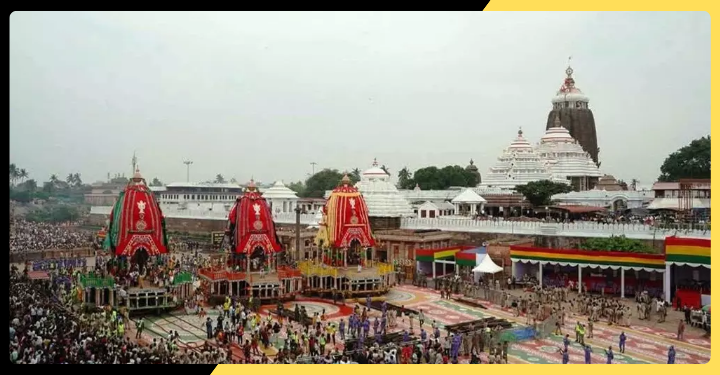
The world-famous Lord Jagannath Rath Yatra began with great religious fervour and elaborate arrangements in the holy city of Puri, Odisha, as millions of devotees gathered to witness one of the largest and most sacred festivals in the world. The annual chariot procession of Lord Jagannath, Lord Balabhadra, and Devi Subhadra is not only a symbol of deep faith but also a massive logistical exercise that requires months of planning, extensive security measures, and coordinated efforts by thousands of officials, volunteers, and temple authorities.
Weeks before the commencement of the festival, the city of Puri underwent extensive preparations to welcome the enormous influx of pilgrims. Roads leading to the Jagannath Temple and the Grand Road (Bada Danda) were repaired and cleaned, while public spaces were decorated with colourful lights, banners, flowers, and traditional artwork. Temporary shelters, drinking water stations, public toilets, medical camps, and information centres were established at various locations to ensure the comfort and convenience of visitors.
One of the most significant aspects of the preparations was the construction of the three magnificent wooden chariots. Following centuries-old traditions, skilled artisans began crafting the giant chariots several months in advance using sacred neem wood. Every component, from the wheels and pillars to the decorative carvings and colourful canopies, was created according to ancient scriptures and traditional measurements. The chariots—Nandighosa for Lord Jagannath, Taladhwaja for Lord Balabhadra, and Darpadalana for Devi Subhadra—stood as remarkable examples of Odisha’s rich craftsmanship and cultural heritage.
As the festival day approached, the Odisha administration implemented comprehensive security arrangements to manage the massive gathering. Thousands of police personnel, special security forces, disaster response teams, traffic police, and home guards were deployed across the city. Security checkpoints were installed at key entry points, while surveillance cameras monitored major locations throughout Puri. Advanced drone technology was also used to observe crowd movement and quickly respond to any emergencies.
Medical preparedness formed another crucial part of the planning. Several temporary hospitals, first-aid centres, ambulances, and emergency response units were positioned along the Rath Yatra route. Teams of doctors, nurses, paramedics, and health workers remained on standby throughout the festival to provide immediate medical assistance whenever required. Special arrangements were also made for elderly pilgrims, children, and differently abled devotees to ensure their safety during the celebrations.
Traffic management was carefully planned to facilitate the movement of both pilgrims and emergency services. Special parking zones were created outside the main festival area, while designated shuttle services transported visitors closer to the Grand Road. Railway authorities introduced additional trains to Puri, and extra buses operated from different parts of Odisha to accommodate the surge in passenger traffic. Volunteers assisted pilgrims with directions, crowd movement, and access to essential facilities.
The spiritual celebrations began early in the morning with sacred rituals inside the Jagannath Temple. Priests performed traditional ceremonies before the deities were ceremonially brought out to their respective chariots in the grand ritual known as Pahandi Bije. Thousands of devotees watched with folded hands as Lord Jagannath, Lord Balabhadra, and Devi Subhadra were carried amidst devotional chanting and the sound of conch shells, cymbals, and traditional drums.
One of the festival’s most revered traditions, Chhera Pahanra, followed soon after. The Gajapati Maharaja of Puri performed the symbolic act of sweeping the platforms of the chariots with a golden broom. This centuries-old ritual represents humility and reminds devotees that every individual is equal before the Almighty, regardless of wealth, status, or position.
As the rituals concluded, thousands of devotees enthusiastically gathered around the giant ropes attached to the three chariots. With chants of “Jai Jagannath” echoing through the city, the massive wooden structures slowly began moving towards the Gundicha Temple. Pulling the sacred chariots is considered a highly auspicious act, and devotees believe it brings spiritual blessings, good fortune, and inner peace.
Apart from the religious ceremonies, the Rath Yatra transformed Puri into a vibrant cultural destination. Traditional Odissi dance performances, devotional music concerts, folk art exhibitions, and cultural processions added colour and excitement to the festival. Local markets bustled with activity as visitors purchased handicrafts, religious souvenirs, traditional textiles, and famous Odia sweets. Hotels, restaurants, transport services, and local businesses also experienced a significant boost due to the large number of tourists and pilgrims.
Environmental awareness also formed part of this year’s preparations. Authorities encouraged the use of eco-friendly materials, improved waste management systems, and organised large-scale cleanliness drives to maintain hygiene throughout the city. Volunteers worked tirelessly to keep public spaces clean and educate visitors about responsible waste disposal during the celebrations.
For devotees unable to attend the festival in person, live television broadcasts and digital streaming platforms enabled millions across India and abroad to witness the sacred procession from their homes. Social media platforms carried real-time updates, photographs, and videos, allowing the spiritual atmosphere of Puri to reach a global audience.
The successful beginning of the Lord Jagannath Rath Yatra reflected months of meticulous planning, unwavering devotion, and seamless coordination among government agencies, temple authorities, security personnel, healthcare workers, and volunteers. As the grand chariots rolled through the streets of Puri amid prayers and celebration, the festival once again demonstrated the timeless values of faith, unity, service, and compassion.
The Jagannath Rath Yatra continues to stand as one of the world’s greatest religious and cultural events, bringing together millions of people in a shared celebration of devotion while preserving centuries-old traditions that remain an enduring source of inspiration for generations to come.