
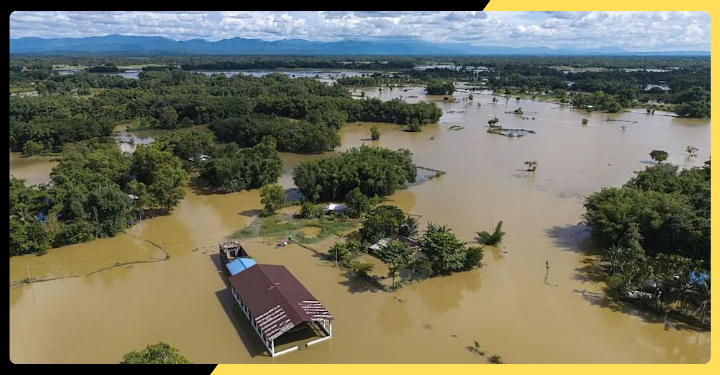
The devastating floods that have swept across Assam have affected every section of society, but perhaps no groups have suffered more than children, farmers, and wildlife. As relentless monsoon rains caused rivers to overflow, thousands of families lost their homes, agricultural fields disappeared beneath muddy waters, and animals struggled to survive in rapidly shrinking habitats. The disaster has highlighted the far-reaching consequences of extreme flooding beyond the immediate loss of property.
Children have emerged among the most vulnerable victims of the flood crisis. Many were forced to flee their homes in the middle of the night as water levels rose dangerously. Families escaped with only essential belongings, leaving behind school books, uniforms, toys, and personal possessions. For many young children, the experience has been deeply traumatic.
Schools across flood-affected districts have either been damaged or converted into relief camps, interrupting education for thousands of students. Teachers and volunteers are attempting to organise temporary learning spaces within shelters, but limited resources and overcrowded conditions make regular education difficult. Experts warn that prolonged school closures can have long-term consequences for children’s learning and emotional well-being.
Healthcare concerns are particularly serious for displaced children. Limited access to clean drinking water and sanitation increases the risk of diarrhoea, cholera, and other infectious diseases. Nutrition also becomes a challenge when families depend on emergency food supplies. Health workers continue to monitor children closely while providing vaccinations, nutritional support, and medical treatment.
Farmers have experienced catastrophic economic losses. Agriculture forms the backbone of Assam’s rural economy, and thousands of hectares of rice fields, vegetable farms, mustard crops, and other agricultural land have been submerged. Months of hard work have been washed away within days.
Many farmers had invested their savings in seeds, fertilisers, machinery, and irrigation before the monsoon. With crops destroyed, they now face uncertainty about repaying loans and supporting their families. Government compensation programmes may provide temporary relief, but rebuilding agricultural livelihoods will require considerable financial assistance and time.
Livestock losses have further deepened the crisis. Cattle, buffaloes, goats, poultry, and other domestic animals represent valuable assets for rural households. Floodwaters have drowned many animals, while others remain stranded without food or veterinary care. Veterinary teams continue rescuing surviving livestock and providing emergency medical treatment.
Wildlife has also suffered significant disruption. Assam is internationally recognised for its rich biodiversity and protected forests, including Kaziranga National Park, home to the world’s largest population of one-horned rhinoceroses. Seasonal flooding is a natural part of the park’s ecosystem, but unusually severe floods force rhinos, elephants, deer, wild buffaloes, and other animals to move towards higher ground.
During these migrations, wildlife faces numerous dangers. Animals crossing highways risk collisions with vehicles, while weakened individuals may struggle to find food and shelter. Forest officials, conservation groups, and volunteers monitor wildlife movements closely and enforce traffic restrictions near protected areas to minimise casualties.
Bird populations are also affected as nesting sites become submerged. Aquatic ecosystems experience sudden changes in water quality, impacting fish populations that many local communities depend upon for food and income.
Environmental scientists note that climate change is making these ecological challenges more frequent. Heavier rainfall, rising temperatures, and changing river behaviour are increasing both the intensity and unpredictability of flood events across the region.
Community organisations have played an essential role in supporting vulnerable groups throughout the disaster. Volunteers have distributed school supplies to children, organised recreational activities within relief camps, provided psychological support, and assisted elderly residents. Agricultural cooperatives are working with farmers to assess damage and prepare for the next planting season.
Government agencies continue implementing relief measures, including compensation for crop losses, livestock assistance, educational support, healthcare services, and infrastructure repairs. Long-term recovery plans focus on strengthening flood-resistant farming practices, improving disaster preparedness, and protecting vulnerable ecosystems.
The Assam floods serve as a powerful reminder that natural disasters affect much more than buildings and roads. They disrupt childhoods, destroy livelihoods, and threaten fragile ecosystems that support millions of people. Protecting children, supporting farmers, and conserving wildlife must remain central to future disaster management strategies.
Although the road to recovery will be long, Assam’s resilience offers hope. With sustained government support, community cooperation, and climate-resilient planning, the state can rebuild stronger while safeguarding both its people and its extraordinary natural heritage.