Japan was plunged into mourning after a powerful magnitude 7.1 earthquake was followed by a deadly explosion at a busy shopping centre, creating one of the country’s most devastating double disasters in recent memory. The powerful tremor shook buildings across the region, but the tragedy escalated dramatically when an explosion ripped through a crowded mall, causing extensive structural damage, multiple fatalities, and dozens of injuries. Rescue teams worked tirelessly through the night as families waited anxiously for news of missing loved ones.
The earthquake struck without warning during peak business hours, when offices, schools, restaurants, and shopping centres were crowded with people. Within moments, the ground began shaking violently, sending shelves crashing to the floor, ceiling panels collapsing, and glass windows shattering. People immediately rushed outside as emergency warning systems urged residents to seek open areas and prepare for possible aftershocks.
Japan’s advanced earthquake early warning system helped many people react quickly by providing precious seconds of notice before the strongest shaking arrived. High-speed trains automatically slowed to a stop, factories suspended operations, and emergency procedures were activated across public facilities. Despite these precautions, the force of the earthquake caused significant damage to roads, buildings, and underground infrastructure.
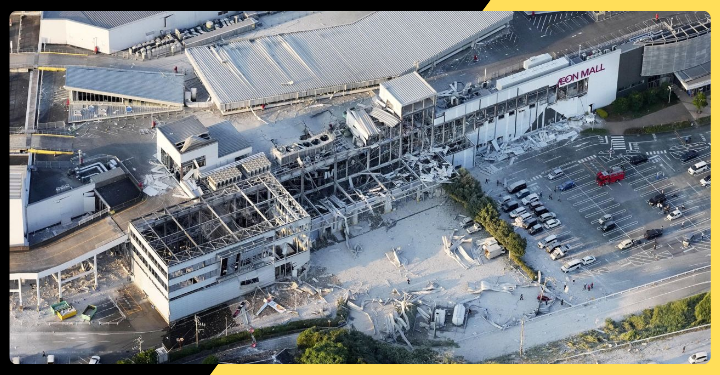
Just minutes after the earthquake subsided, disaster struck again. A massive explosion erupted inside a large shopping centre that had already sustained damage from the seismic activity. Witnesses reported hearing an enormous blast that echoed across nearby neighbourhoods before thick black smoke filled the sky. The explosion triggered fires inside several retail outlets and caused parts of the building to collapse, trapping shoppers, employees, and security staff beneath the rubble.
Eyewitnesses described scenes of panic and confusion as people desperately searched for exits. Parents became separated from their children, shop workers guided customers through smoke-filled corridors, and security personnel helped evacuate elderly visitors. Some survivors escaped with only minor injuries, while others suffered burns, fractures, and cuts from falling debris and shattered glass.
Emergency services responded within minutes despite difficult conditions created by damaged roads and ongoing aftershocks. Firefighters immediately began tackling the flames while specialised urban search-and-rescue teams entered the unstable structure. Equipped with rescue dogs, drones, thermal imaging cameras, and acoustic listening devices, they carefully searched for signs of life beneath collapsed concrete and twisted steel.
The rescue mission was extremely dangerous. Structural engineers warned that weakened sections of the shopping centre could collapse further if strong aftershocks occurred. Rescue crews therefore removed debris slowly and methodically, balancing speed with safety in the hope of reaching trapped survivors alive.
Hospitals across the region activated emergency disaster protocols as ambulances continued arriving with injured victims throughout the day. Doctors and nurses worked around the clock treating burns, broken bones, smoke inhalation, head injuries, and severe lacerations. Additional medical teams were called in from neighbouring prefectures, while blood donation centres appealed to the public for urgent assistance.
Authorities confirmed that several people had lost their lives, although officials warned that the number of casualties could rise as rescue workers reached deeper sections of the collapsed building. Many families gathered outside hospitals, emergency shelters, and disaster response centres waiting for updates on relatives who remained missing.
Investigators have begun examining the exact cause of the explosion. Preliminary assessments indicate that underground gas pipelines or damaged electrical systems may have been compromised during the earthquake, creating conditions that led to the blast. Experts explained that secondary disasters such as fires and explosions are among the greatest dangers following major earthquakes, particularly in densely populated urban areas.
The Japanese government immediately activated its national emergency response system. The Prime Minister expressed condolences to the victims’ families and assured the nation that every available resource would be deployed to support rescue operations. Police officers, firefighters, disaster management agencies, and the Japan Self-Defense Forces worked together to restore order and assist affected communities.
The earthquake also caused widespread disruption throughout the region. Railway lines were temporarily suspended while engineers inspected tracks and bridges for structural damage. Several highways were closed because of cracked roads and fallen debris, while airports delayed flights during safety inspections. Thousands of homes experienced temporary power failures, and gas and water supplies were shut off in damaged districts as a precaution against further accidents.
Temporary evacuation shelters were established in schools, community halls, and sports facilities to accommodate residents whose homes were no longer safe. Volunteers distributed food, clean drinking water, blankets, clothing, and hygiene supplies. Mental health professionals also began providing counselling services to survivors dealing with trauma and loss.
Seismologists warned that aftershocks could continue for several days or even weeks, urging residents to remain cautious and avoid entering damaged buildings. Authorities encouraged households to keep emergency supplies ready, including food, water, medicines, flashlights, portable radios, and first-aid kits.
As rescue workers continued searching under floodlights late into the night, hope remained that more survivors could still be found beneath the wreckage. Every rescued victim brought renewed determination to emergency crews working in hazardous conditions.
The tragedy has once again demonstrated Japan’s remarkable resilience and preparedness in responding to natural disasters. However, it also serves as a powerful reminder that even the world’s most advanced earthquake safety systems cannot eliminate every risk. As the nation begins the long road to recovery, the focus remains on saving lives, supporting grieving families, rebuilding damaged communities, and learning valuable lessons that may help reduce the impact of future disasters.