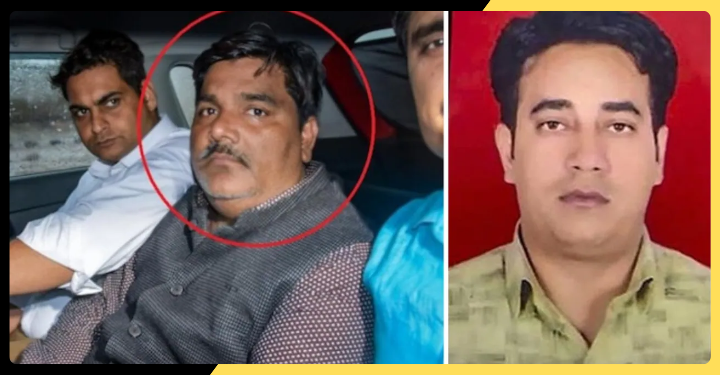
A Delhi court has sentenced former Aam Aadmi Party (AAP) councillor Tahir Hussain to life imprisonment for the murder of Intelligence Bureau (IB) officer Ankit Sharma during the northeast Delhi riots of February 2020. The verdict brings a major chapter of one of the country’s most high-profile riot-related cases to a close at the trial court level. Describing the murder as an act of “savagery,” the court held that the prosecution had established Hussain’s guilt beyond reasonable doubt and imposed life imprisonment along with convictions under multiple criminal provisions.
The judgment follows years of investigation, legal proceedings, and examination of extensive evidence. During the trial, prosecutors presented witness testimonies, forensic reports, electronic evidence, CCTV footage, call records, and other documentary material to establish Hussain’s alleged role in the conspiracy that led to Sharma’s death. The court concluded that the evidence collectively supported the prosecution’s case and justified a conviction.
Ankit Sharma, a 26-year-old Security Assistant with the Intelligence Bureau, disappeared on February 25, 2020, when communal violence had reached its peak in several parts of northeast Delhi. According to his family, Sharma had left home but never returned. His disappearance triggered an immediate search by relatives and local authorities.
The following day, Sharma’s body was recovered from a drain in the Chand Bagh area. The post-mortem examination revealed multiple stab wounds and blunt-force injuries, indicating that he had been subjected to a brutal assault before his death. The nature of the injuries became a central aspect of the prosecution’s argument that the murder was deliberate, violent, and carried out by an unlawful mob during the riots.
According to the prosecution, Tahir Hussain’s residence was allegedly used as a base by individuals participating in the violence. Investigators claimed that stones, petrol bombs, acid packets, and other materials were collected and distributed from the premises during the riots. Police also relied on CCTV footage, drone recordings, mobile phone location data, digital evidence, and eyewitness testimonies to support their allegations.
Prosecutors argued that Hussain actively participated in a criminal conspiracy and facilitated unlawful assemblies that attacked members of the public. While acknowledging that multiple accused individuals were involved, the prosecution maintained that Hussain played a crucial role in enabling the mob responsible for Sharma’s murder. They urged the court to impose strict punishment, arguing that the gravity of the offence warranted severe consequences.
The defence strongly denied the allegations throughout the proceedings. Hussain’s legal team argued that he had been falsely implicated due to political reasons and asserted that there was no direct evidence showing he personally attacked or killed Ankit Sharma. The defence also stated that Hussain had contacted the police during the riots, requesting protection for himself and his family because they too were affected by the violence. His lawyers challenged the credibility of prosecution witnesses and disputed the interpretation of electronic and forensic evidence presented during the trial.
After hearing both sides and reviewing the evidence, the court concluded that the prosecution had successfully established Hussain’s involvement beyond reasonable doubt. While describing the murder as exceptionally brutal, the judge decided that life imprisonment was the appropriate sentence after considering the legal principles governing punishment. The court chose not to award the death penalty, finding that life imprisonment adequately addressed the seriousness of the offence.
The verdict was welcomed by Ankit Sharma’s family, who said they had spent years pursuing justice through the legal system. Family members stated that although the judgment could never compensate for their personal loss, they believed it represented accountability for one of the most tragic incidents during the 2020 Delhi riots. They expressed hope that the decision would strengthen confidence in the rule of law and discourage similar acts of violence in the future.
The northeast Delhi riots of February 2020 remain one of the deadliest episodes of communal violence in the capital in recent decades. The clashes erupted amid tensions surrounding protests over the Citizenship Amendment Act (CAA) and spread rapidly across several neighbourhoods. More than 50 people lost their lives, hundreds were injured, and extensive damage was caused to homes, commercial establishments, schools, vehicles, and places of worship.
In the aftermath of the riots, Delhi Police registered numerous criminal cases and conducted one of the largest investigations into communal violence in recent years. Investigators collected thousands of pages of evidence, including forensic reports, electronic data, CCTV recordings, and witness statements. The case involving Tahir Hussain became one of the most closely followed because of the profile of both the victim and the accused.
Legal experts point out that Hussain has the right to appeal the conviction and life sentence before the Delhi High Court. Under Indian law, every convicted individual is entitled to challenge the findings of a trial court. If an appeal is filed, the higher court will re-examine the evidence, legal conclusions, and sentencing before delivering its own decision.
The judgment has once again brought attention to issues of communal violence, political accountability, and the responsibility of public representatives during periods of unrest. While public and political reactions to the case continue to vary, the court’s decision is based solely on the evidence presented during the trial and the applicable provisions of criminal law.
As the legal process continues through possible appeals, the conviction of Tahir Hussain stands as one of the most significant verdicts arising from the 2020 Delhi riots. For the family of Ankit Sharma, the decision provides a measure of justice after years of grief and legal proceedings. For the Indian judiciary, it represents an important affirmation that serious crimes committed during episodes of communal violence can be addressed through due process and the rule of law.