
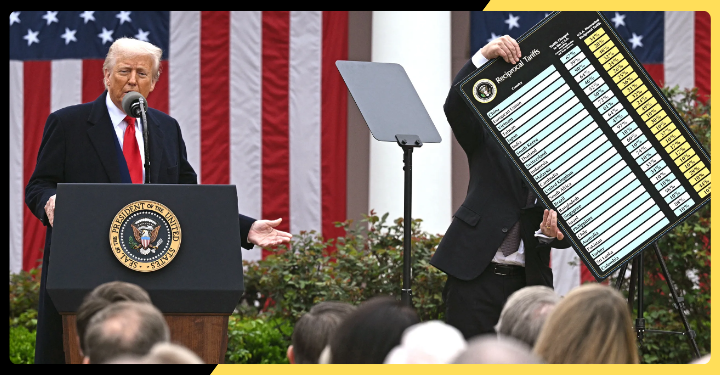
The Trump administration has been hit with a fresh legal challenge after a coalition of 25 U.S. states filed a lawsuit over its newly announced tariffs on imports from dozens of America’s trading partners. The lawsuit, lodged in the U.S. Court of International Trade, accuses the administration of exceeding its legal authority by imposing broad import duties that could significantly affect businesses, consumers, and the broader U.S. economy.
The legal action marks another chapter in the ongoing debate over President Donald Trump’s trade strategy, which has relied heavily on tariffs to address what the administration describes as unfair trade practices and to strengthen domestic manufacturing. While the White House argues that the new tariffs are essential for protecting American workers and promoting ethical global trade, the coalition of states claims the administration has acted beyond the limits established by federal law.
According to government officials, the latest tariff package applies to imports from nearly 60 countries and territories. The administration has stated that the duties are aimed at encouraging foreign governments to eliminate forced labor from supply chains while creating a more level playing field for American industries competing in global markets.
The coalition of states, however, argues that the tariffs represent an unlawful expansion of presidential authority. In their complaint, state attorneys general claim that the administration is attempting to restore sweeping trade restrictions that previous court decisions had already found to be legally flawed. Although the White House is relying on a different statutory authority than in earlier tariff disputes, the states argue that the practical outcome remains largely the same.
The lawsuit emphasizes that Congress, under the U.S. Constitution, has primary responsibility for regulating international commerce. While lawmakers have delegated limited trade powers to the executive branch through various federal statutes, the plaintiffs argue that those powers must be exercised within clearly defined legal boundaries. According to the complaint, the administration failed to satisfy those requirements before implementing the new tariffs.
State officials also highlight the economic consequences of the policy. Tariffs increase the cost of imported products entering the United States, forcing businesses to pay more for goods, raw materials, and industrial equipment sourced from overseas. Those higher costs are often passed along to consumers, resulting in increased prices across a wide range of products.
Economists note that products such as electronics, home appliances, furniture, automotive parts, clothing, and industrial machinery could become more expensive if the tariffs remain in effect. Businesses that depend on imported components may also experience higher production costs, making it more difficult to remain competitive in both domestic and international markets.
Manufacturers have expressed concern that increased import costs could disrupt supply chains and delay production schedules. Many companies rely on specialized parts that cannot easily be replaced by domestic alternatives. Rising expenses may reduce profit margins, discourage future investment, and slow expansion plans in several industries.
Small businesses are expected to face some of the greatest challenges. Unlike large multinational corporations with diversified supply chains, many small companies have limited financial resources and fewer options for finding alternative suppliers. Business groups warn that prolonged tariffs could reduce hiring, limit growth opportunities, and increase financial uncertainty for local employers.
Retailers are also closely monitoring the legal dispute. Higher import duties could force stores to raise prices on many consumer products. At a time when inflation remains a concern for many households, additional price increases may reduce consumer spending and affect overall economic activity.
The Trump administration continues to defend its approach, arguing that tariffs remain an effective tool for addressing unfair foreign trade practices. Officials believe stronger enforcement measures will encourage trading partners to negotiate fairer agreements while reducing America’s dependence on overseas manufacturing. The administration also maintains that promoting ethical labor standards through economic pressure serves an important national interest.
Supporters of the tariff policy argue that short-term economic costs may ultimately produce long-term benefits. They believe encouraging domestic production could strengthen American manufacturing, create additional jobs, improve supply chain resilience, and enhance national economic security.
Critics disagree, arguing that tariffs function as hidden taxes on consumers because businesses generally transfer higher import costs through increased retail prices. Several economic studies have suggested that while tariffs may protect certain industries, they often impose broader costs across the economy.
Legal analysts believe the lawsuit could become one of the most important trade cases in recent years. The Court of International Trade is expected to carefully examine whether the administration properly interpreted federal trade laws and whether its legal justification satisfies the statutory requirements established by Congress.
If the court rules against the administration, the decision could significantly limit the ability of future presidents to impose broad tariffs without congressional approval. Conversely, a ruling in favor of the White House could expand executive authority over trade policy and provide future administrations with greater flexibility in responding to international economic disputes.
Regardless of the outcome, appeals are widely expected. The case could ultimately reach the U.S. Supreme Court, where justices may once again determine the constitutional limits of presidential power over international trade.
As the legal proceedings move forward, businesses, investors, policymakers, and international trading partners will closely watch every development. The final ruling has the potential to reshape U.S. trade policy, influence future economic strategy, and redefine the balance of power between Congress and the presidency in matters of international commerce.