India has found itself at the center of a delicate diplomatic situation after Bangladesh reportedly requested clarification over former Prime Minister Sheikh Hasina’s planned speech in New Delhi. The development has added fresh complexity to bilateral relations between the two neighboring countries, with Dhaka seeking reassurance that Indian territory will not be used in a manner that could influence Bangladesh’s internal political affairs.
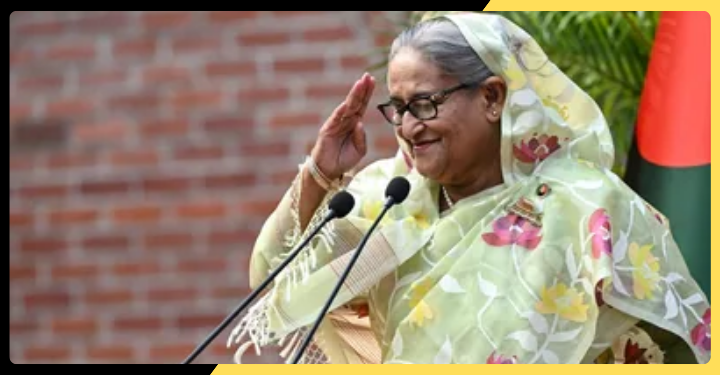
According to diplomatic sources, Bangladesh’s interim government contacted Indian authorities through official diplomatic channels after reports suggested that Sheikh Hasina, currently staying in India, was preparing to address supporters from the national capital. While the reports have generated widespread media attention, neither government has officially confirmed the details of the communication or the proposed event.
The request is viewed by many analysts as a precautionary diplomatic measure rather than a formal objection. Bangladesh is believed to be seeking greater transparency regarding India’s approach before any public address takes place, hoping to avoid misunderstandings that could complicate one of South Asia’s most significant bilateral relationships.
Sheikh Hasina has remained in India since departing Bangladesh following political developments that resulted in a change of government. Since then, New Delhi has maintained that her presence is based on humanitarian considerations and has refrained from commenting publicly on any political activities associated with the former Bangladeshi leader.
However, reports indicating that Hasina could soon deliver a speech have changed the diplomatic landscape. Bangladesh reportedly fears that any political message delivered from Indian soil could have an impact on domestic politics, particularly during a period when the country continues to experience political uncertainty and institutional transition.
India now faces the challenge of balancing multiple priorities. On one side is its long-standing relationship with Sheikh Hasina, under whose leadership India and Bangladesh strengthened cooperation across nearly every major sector. On the other is India’s commitment to maintaining constructive ties with Bangladesh’s current administration while adhering to its policy of respecting the sovereignty and internal affairs of neighboring countries.
Foreign policy experts say New Delhi has historically exercised caution in similar situations involving foreign political figures residing in India. The country has generally avoided permitting activities that could be interpreted as interference in another nation’s domestic politics. This precedent may influence how Indian authorities respond to the reported request from Dhaka.
Political observers point out that the issue extends beyond the proposed speech itself. It reflects the broader challenge of managing diplomatic relationships during periods of political transition. Any decision taken by India will likely be examined carefully not only in Bangladesh but also across the region.
Despite the current uncertainty, officials and analysts agree that the overall relationship between India and Bangladesh remains strong. Over the past decade, bilateral cooperation has expanded significantly in areas including trade, transportation, infrastructure, border security, defense cooperation, energy sharing, and regional connectivity.
Trade between the two countries has reached record levels, with Bangladesh becoming one of India’s largest trading partners in South Asia. Infrastructure initiatives such as railway modernization, road connectivity, inland waterways, and cross-border electricity transmission have further strengthened economic integration.
Security cooperation has also become a defining feature of bilateral relations. Both governments have worked closely to address terrorism, organized crime, illegal trafficking, and border management. These shared security interests have reinforced mutual trust and contributed to regional stability.
Against this backdrop, diplomats from both countries are expected to handle the current issue with considerable care. Analysts believe quiet negotiations and confidential diplomatic consultations will remain the preferred approach rather than public exchanges that could increase tensions.
The proposed speech has attracted international attention because Sheikh Hasina continues to be one of Bangladesh’s most prominent political figures. Even outside office, her statements carry considerable political influence among supporters and political observers. Any public remarks are therefore likely to receive significant coverage both domestically and internationally.
Experts also note that much will depend on the nature of the speech if it ultimately takes place. A speech focusing on personal experiences, democratic values, or messages to supporters abroad may generate less controversy than one containing direct political criticism or commentary on Bangladesh’s current administration.
Some foreign policy specialists believe India could encourage a measured approach that avoids unnecessary political controversy while respecting humanitarian considerations. Such an approach would be consistent with New Delhi’s broader foreign policy objective of maintaining stable and cooperative relations with all neighboring countries.
Meanwhile, Bangladesh’s request for clarification underscores the importance of diplomacy in managing politically sensitive issues. Rather than reacting after events unfold, Dhaka has chosen to seek answers through official channels, allowing both governments the opportunity to resolve concerns before they escalate.
As of now, there has been no official announcement regarding the timing, venue, or content of Sheikh Hasina’s reported speech. Indian authorities have also not indicated whether permission has been granted for any public gathering. Until official statements are released, the matter remains the subject of diplomatic consultations and media speculation.
The coming days are expected to provide greater clarity on the issue. Regardless of the immediate outcome, both India and Bangladesh have strong strategic, economic, and security interests in ensuring that temporary political sensitivities do not overshadow decades of successful cooperation. Most analysts believe the two governments will continue to prioritize dialogue, mutual respect, and regional stability as they work through this latest diplomatic challenge.