The ongoing student protest in Jharkhand has entered another phase after discussions between the government and a faction of protesting students ended without an agreement. With no breakthrough emerging from the latest meeting, students have decided to continue their agitation.
The talks were expected to provide an opportunity for the administration and student representatives to narrow their differences. Instead, the meeting concluded without a settlement, leaving the main issues unresolved.
The protest has drawn attention to concerns among students regarding education, examinations, recruitment and employment opportunities. These issues are particularly sensitive because thousands of young people depend on transparent and predictable government processes to plan their careers.
Student representatives have argued that their concerns need to be addressed through specific action. They have indicated that they are not prepared to withdraw the protest merely on the basis of general assurances.
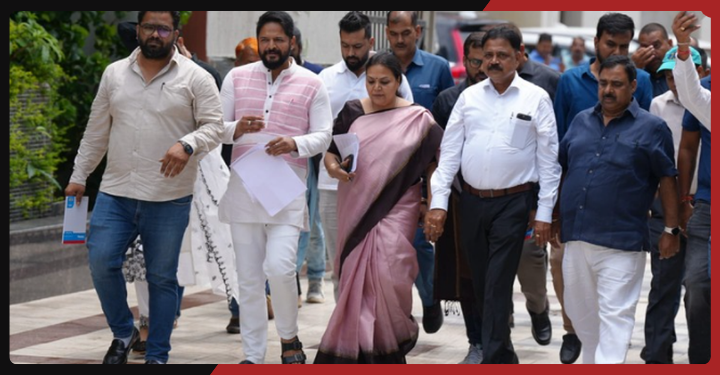
The government, meanwhile, has continued to engage with representatives from the protest movement. The latest meeting with another faction demonstrates that authorities are trying to find a way forward through dialogue.
However, negotiations involving multiple factions can be complicated. Different groups may have different priorities or approaches, even when they share broader concerns. A successful settlement may therefore require wider coordination among student organisations.
The failure of the latest talks means the government faces renewed pressure. Continued protests can keep the issue in public focus and force authorities to respond more directly to the demands.
At the same time, students will have to decide how long they can maintain the agitation. Protests require sustained participation and organisation, particularly when negotiations continue without immediate results.
The next stage could therefore involve further meetings, additional demonstrations or attempts to bring different student groups together. The government’s ability to communicate a clear position could play an important role in determining what happens next.
A peaceful resolution remains possible if both sides demonstrate flexibility. The administration could consider addressing specific demands through measurable steps, while student leaders could assess whether proposed measures provide enough grounds for ending or suspending the protest.
The latest deadlock, however, shows that such an outcome has not yet been reached.
The Jharkhand student agitation is consequently likely to remain an important political and social issue in the state. The protests have put student concerns at the centre of public attention and increased pressure on the government to find a solution.
For the students, the message following the latest talks is clear: the movement will continue. For the government, the challenge is now to find a way to restart negotiations and convert dialogue into concrete progress.
The coming meetings could prove crucial. If another round of talks produces specific commitments, the situation could begin moving towards a settlement. If negotiations again fail, the agitation could continue to intensify.
For now, the deadlock remains, and Jharkhand’s student protest continues.