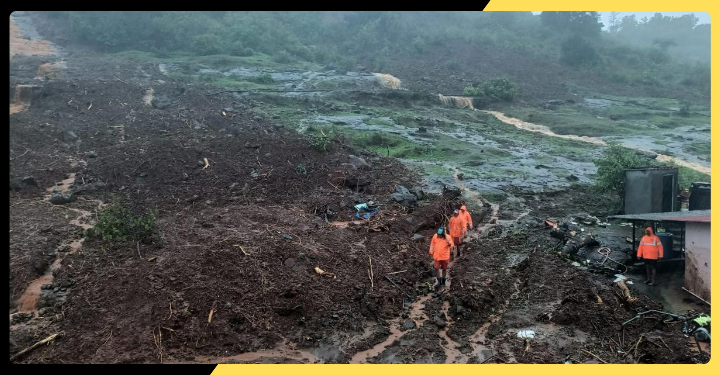
The Maharashtra government has launched an extensive relief and emergency response operation following the record-breaking monsoon rains that have affected Mumbai, Palghar, Raigad, and several other districts. With heavy rainfall causing flooding, landslides, transportation disruptions, and loss of life, state authorities have mobilized multiple departments to provide immediate assistance to affected communities. The government has emphasized that protecting lives, restoring essential services, and ensuring timely relief remain its highest priorities during the ongoing monsoon emergency.
Soon after the rainfall intensified, the State Emergency Operations Centre began monitoring the situation around the clock. District administrations were instructed to activate disaster management plans and coordinate closely with the National Disaster Response Force (NDRF), State Disaster Response Force (SDRF), police, fire brigade, municipal corporations, health departments, and local governing bodies. Daily review meetings have been conducted to assess rainfall patterns, flood conditions, rescue progress, and resource requirements.
Chief Minister and senior cabinet ministers have been receiving regular updates from district collectors and disaster management officials. Authorities have directed all concerned agencies to maintain constant communication and respond immediately to any emergency reported by citizens. Control rooms have been established in every affected district to receive distress calls, coordinate rescue operations, and provide information to the public.
One of the government’s immediate priorities has been the evacuation of residents living in flood-prone and landslide-vulnerable areas. Thousands of people have been shifted to safer locations before conditions became more dangerous. Temporary relief camps have been established in schools, community centers, marriage halls, and government buildings, where displaced families are receiving shelter, food, clean drinking water, blankets, sanitation facilities, and medical assistance.
The government has ensured that relief camps are equipped with essential facilities to support affected residents. Medical teams regularly visit these camps to conduct health check-ups, provide medicines, and monitor the spread of infectious diseases. Special attention has been given to children, pregnant women, senior citizens, and people with chronic illnesses who may require additional healthcare support during prolonged displacement.
Financial assistance has also been announced for the families of those who lost their lives due to rain-related incidents. Compensation packages are being processed under existing disaster relief guidelines to provide immediate support to bereaved families. In addition, authorities have initiated surveys to assess damage to homes, shops, agricultural land, livestock, and public infrastructure. The collected data will help determine further financial assistance for affected households and farmers.
Municipal corporations across Mumbai and neighboring districts have intensified efforts to restore civic services disrupted by flooding. Drainage systems are being cleared continuously to remove accumulated debris and accelerate water drainage. Engineering teams are inspecting roads, bridges, culverts, and public buildings for structural damage before allowing normal public use. Road repair work has begun in locations where floodwaters have receded.
Electricity distribution companies are working in coordination with disaster management officials to restore power safely in affected areas. In localities where electricity was disconnected to prevent electrocution, engineers are inspecting electrical infrastructure before reconnecting supply. Residents have been advised not to use electrical appliances that may have been submerged until they are inspected by qualified technicians.
Water supply departments are also taking preventive measures to ensure safe drinking water reaches affected communities. Water quality testing has been intensified, while additional tanker services have been deployed in areas where pipelines were damaged or contaminated by floodwater. Public health officials continue to advise citizens to boil drinking water and maintain proper hygiene to prevent waterborne diseases.
Agriculture has emerged as one of the sectors most severely affected by the heavy rainfall. Standing crops have been submerged in several districts, causing significant financial losses for farmers. The state agriculture department has begun conducting crop damage assessments, and officials have assured farmers that compensation will be provided under government relief schemes. Agricultural experts are also advising farmers on soil recovery and crop management once floodwaters recede.
To ensure uninterrupted emergency response, the government has deployed additional personnel and equipment to vulnerable districts. High-capacity water pumps, earthmoving machines, rescue boats, ambulances, and emergency communication systems have been supplied where required. Fuel reserves and emergency medical supplies have also been stocked to support ongoing operations.
The education department has instructed schools and colleges in heavily affected districts to remain closed until weather conditions improve. Educational institutions are encouraged to conduct online classes wherever possible to minimize disruption to students’ learning. School buildings serving as relief camps have been provided with additional sanitation facilities and security arrangements.
Public transportation authorities are working closely with local administrations to restore railway, bus, and road services. Railway engineers continue inspecting tracks affected by flooding, while road transport departments are repairing damaged highways and clearing landslide debris. Airport authorities remain in constant contact with weather agencies to ensure flight operations are managed safely during adverse weather conditions.
The government has also intensified public awareness campaigns through television, radio, newspapers, mobile alerts, and social media. Citizens are being encouraged to follow official weather updates, avoid unnecessary travel, stay away from flooded roads and rivers, and immediately report emergencies through designated helpline numbers. Authorities have also warned against spreading false information that could create panic among the public.
Experts have emphasized that long-term solutions are equally important. The current crisis has highlighted the need for better urban planning, modern drainage infrastructure, scientific flood forecasting, improved waste management, and stricter regulation of construction in environmentally sensitive areas. Government officials have indicated that these issues will be reviewed as part of future disaster preparedness and climate resilience strategies.
Despite the enormous challenges posed by the record-breaking monsoon, the coordinated efforts of government agencies, emergency responders, healthcare workers, municipal staff, and community volunteers have helped reduce the overall impact of the disaster. While recovery is expected to take time, authorities remain committed to restoring normalcy, supporting affected families, and strengthening the state’s ability to respond to future extreme weather events.