
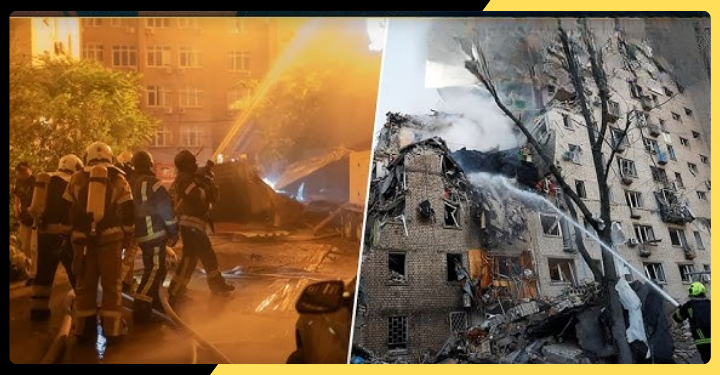
The latest Russian missile and drone attack on Kyiv has added to the growing humanitarian challenges facing Ukraine, with thousands of civilians once again forced to spend the night in shelters as explosions echoed across the capital. The strike, which killed at least eight people and injured dozens, left many families without homes and highlighted the continuing toll of the conflict on ordinary citizens far from the front lines.
As air raid sirens sounded across the city, residents rushed to underground metro stations, basements, and designated bomb shelters carrying essential belongings. Parents held frightened children close while elderly residents and people with disabilities relied on neighbors, volunteers, and emergency workers for assistance. For many Kyiv residents, the routine of seeking shelter during missile attacks has become an unfortunate part of daily life, yet each new assault brings renewed anxiety and uncertainty.
When daylight arrived, the scale of the destruction became clear. Apartment buildings had suffered severe structural damage, windows were shattered across entire neighborhoods, and vehicles were buried beneath fallen concrete and debris. Many families returned from shelters only to discover that their homes had been damaged beyond repair. Others faced the painful reality of searching for missing relatives while rescue teams continued digging through collapsed buildings.
Local authorities quickly established temporary accommodation centers for displaced residents. Schools, community halls, and public buildings were converted into emergency shelters where families received food, clean drinking water, blankets, clothing, and medical care. Volunteers from humanitarian organizations worked alongside local officials to register displaced residents and assess their immediate needs.
Medical services also faced significant pressure following the attack. Hospitals across Kyiv treated dozens of people suffering from blast injuries, burns, broken bones, and psychological trauma. Healthcare professionals worked extended shifts as emergency departments remained on high alert throughout the night. Mental health specialists were also deployed to provide counseling for children and adults who experienced severe emotional distress during the bombardment.
Children remain among the most vulnerable victims of repeated missile attacks. Frequent air raid alerts disrupt education, family life, and emotional well-being. Schools are often forced to suspend classes during emergencies, while many students continue their education under the constant possibility of renewed attacks. Teachers and counselors have reported increasing concerns about anxiety, stress, and sleep disorders among young people living in conflict-affected areas.
Older adults and individuals with chronic medical conditions face additional hardships during prolonged emergencies. Interruptions to electricity, heating, and healthcare services can complicate access to essential medications and medical treatment. Humanitarian organizations continue working to ensure that vulnerable residents receive necessary support, including prescription medicines, mobility assistance, and access to healthcare facilities.
Essential infrastructure also suffered damage during the latest strike. Power outages affected several districts, while utility crews worked to restore electricity, water, and communication services. Repair teams faced difficult conditions as they inspected damaged electrical networks and removed hazardous debris from public roads. Authorities urged residents to avoid impacted areas until safety inspections could be completed.
Community solidarity has become one of Ukraine’s strongest responses to repeated attacks. Volunteers distributed hot meals, bottled water, hygiene supplies, and children’s necessities to affected families. Local businesses donated food and emergency equipment, while residents opened their homes to neighbors who had lost shelter. Social media platforms were used to coordinate relief efforts, locate missing persons, and connect volunteers with those requiring assistance.
International humanitarian agencies also increased emergency support following the attack. Relief organizations supplied medical kits, temporary housing materials, generators, and psychological support services while coordinating closely with Ukrainian authorities. Aid officials warned that repeated strikes continue to increase humanitarian needs, making sustained international assistance essential for affected communities.
Despite the destruction and continuing uncertainty, many Kyiv residents expressed determination to rebuild their lives. Cleanup operations began almost immediately after rescue teams completed their work, with volunteers helping remove debris and salvage personal belongings from damaged homes. Community members gathered to support one another, demonstrating resilience in the face of repeated hardship.
As the conflict continues, humanitarian experts warn that Ukraine’s civilian population will require ongoing assistance, not only for immediate emergency relief but also for long-term recovery. Rebuilding homes, restoring public services, supporting mental health, and helping displaced families return to normal life will remain major challenges long after the immediate crisis has passed.
The latest attack serves as another reminder that behind every headline are thousands of families coping with loss, displacement, and uncertainty. While emergency workers continue saving lives and aid organizations provide critical assistance, millions of Ukrainians remain determined to endure, rebuild, and support one another despite the continuing dangers posed by the war.