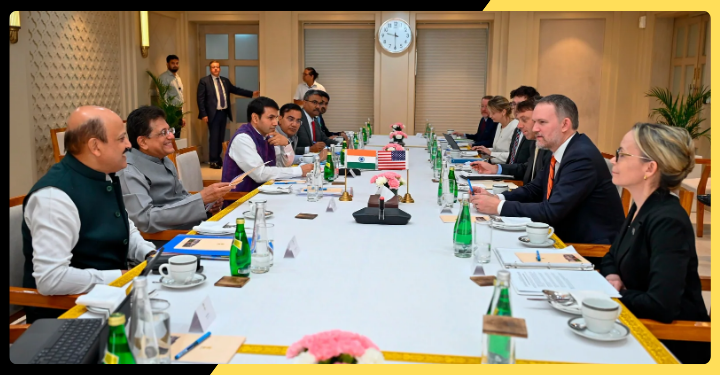
India and the United States are expected to intensify bilateral trade discussions as New Delhi seeks the withdrawal of Washington’s proposed 12.5% tariff on selected imports. Indian officials have emphasized that diplomatic engagement remains the most effective way to address trade concerns and strengthen one of the world’s fastest-growing economic partnerships.
The proposed tariff has become a significant issue in ongoing economic discussions between the two countries. While India has acknowledged that trade differences are a normal part of international commerce, it has urged the United States to avoid measures that could disrupt business activity and affect long-term investment plans. Instead, New Delhi has called for a balanced approach based on negotiation, cooperation, and mutual economic interests.
Over the past several years, India and the United States have witnessed remarkable growth in bilateral trade. The two nations have expanded cooperation across a broad range of industries, including pharmaceuticals, engineering products, information technology, agriculture, renewable energy, aerospace, defense manufacturing, and digital services. Increasing private-sector investments have also strengthened commercial ties, making both economies important partners in global supply chains.
Indian exporters have expressed concern that the proposed tariff could reduce the competitiveness of their products in the American market. Higher import duties often translate into increased prices for buyers, potentially affecting demand for goods ranging from industrial products and textiles to engineering equipment and specialty chemicals. Export-oriented businesses believe maintaining open market access is essential for sustaining growth and employment.
Business organizations have supported India’s decision to pursue negotiations rather than retaliatory trade measures. Industry representatives argue that constructive dialogue allows both governments to address concerns over tariffs, market access, customs regulations, and product standards without creating unnecessary uncertainty for investors. They believe that long-term commercial relationships benefit from predictable and transparent trade policies.
Economic analysts note that American companies could also experience the effects of higher tariffs. Many US manufacturers and retailers source products, components, and raw materials from India as part of integrated global supply chains. Increased import costs may affect production expenses, reduce operational efficiency, or lead to higher prices for consumers. As a result, businesses in both countries have encouraged policymakers to reach a mutually beneficial agreement.
India has consistently positioned itself as a reliable trading partner committed to rules-based international commerce. Government officials have highlighted ongoing economic reforms aimed at improving the ease of doing business, expanding manufacturing capacity, attracting foreign investment, and strengthening export competitiveness. Continued cooperation with the United States is viewed as an important component of India’s long-term growth strategy.
Trade experts believe the current discussions provide an opportunity to advance broader economic cooperation beyond the immediate tariff issue. Negotiators may explore additional measures to improve market access, simplify customs procedures, encourage investment, strengthen digital trade, and promote collaboration in emerging technologies. Progress in these areas could create new opportunities for businesses while supporting stronger bilateral economic growth.
The India-US partnership extends far beyond trade. Both countries have deepened collaboration in defense, space technology, healthcare, education, climate initiatives, semiconductor manufacturing, and artificial intelligence. These shared strategic interests have strengthened diplomatic relations and created a strong foundation for resolving commercial disagreements through continued engagement.
Industry leaders remain optimistic that both governments recognize the importance of maintaining stable trade relations. Companies operating across borders have made substantial investments based on expectations of long-term cooperation and predictable policy frameworks. Preserving this confidence is considered essential for encouraging future investments and expanding business opportunities.
As negotiations continue, policymakers from both nations are expected to remain focused on achieving a balanced outcome that protects domestic interests while supporting international commerce. Trade officials have repeatedly emphasized the value of open communication in resolving complex economic issues and preventing unnecessary disruptions to business activity.
The final outcome of the discussions will be closely watched by exporters, investors, multinational companies, and financial markets around the world. A successful agreement could strengthen economic cooperation, reinforce investor confidence, and open new avenues for trade and investment between India and the United States. By choosing diplomacy over confrontation, both countries have the opportunity to reinforce their strategic partnership and contribute to a more stable and resilient global trading system.