
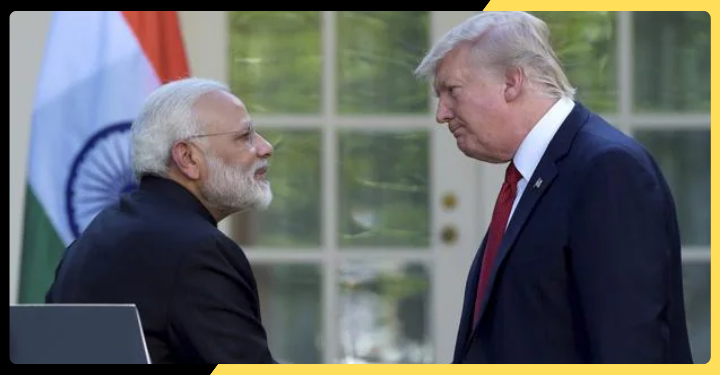
Indian Prime Minister Narendra Modi’s upcoming engagement with former U.S. President Donald Trump is expected to focus on renewing and strengthening the bilateral partnership between India and the United States, even as underlying concerns about trust and policy alignment continue to shape the diplomatic landscape. The meeting comes at a time when both nations are reassessing their global roles amid shifting geopolitical and economic conditions.
Over the past two decades, India and the United States have steadily expanded cooperation across multiple sectors, evolving from a cautious diplomatic relationship into a comprehensive strategic partnership. This transformation has been driven by shared interests in regional stability, economic growth, defense cooperation, and technological innovation. However, despite this progress, periodic differences in policy approaches have created friction that both sides now appear keen to address.
Modi’s call for renewed partnership reflects a desire to reinforce the foundations of bilateral ties while acknowledging the need for greater consistency and trust. In international relations, partnerships are not static; they require continuous engagement, recalibration, and mutual reassurance. As global challenges become more complex, maintaining strong bilateral relationships has become increasingly important.
One of the key areas expected to dominate discussions is economic cooperation. India and the United States are major trading partners, with bilateral trade spanning goods, services, and investments across a wide range of industries. Sectors such as information technology, pharmaceuticals, energy, agriculture, and manufacturing form the backbone of this economic relationship. Both governments have expressed interest in expanding trade further, though policy differences occasionally slow progress.
Market access and tariff-related issues remain persistent concerns. Indian exporters have sought more predictable access to U.S. markets, while American companies have pushed for reduced regulatory barriers in India. Addressing these concerns will likely be essential for building renewed confidence in the economic partnership. Improved trade relations could also enhance supply chain resilience and stimulate investment flows between the two countries.
Defense and security cooperation continue to serve as strong pillars of the relationship. Over the years, India has increased its defense procurement from the United States and participated in joint military exercises aimed at improving interoperability between the armed forces of both nations. Intelligence sharing and maritime security cooperation in the Indo-Pacific region have further strengthened strategic ties. Despite this progress, maintaining long-term trust requires consistent policy alignment and sustained engagement.
Technology cooperation is another critical dimension of the renewed partnership agenda. Both India and the United States are investing heavily in emerging technologies such as artificial intelligence, semiconductor manufacturing, cybersecurity, and space exploration. Collaboration in these fields has the potential to drive innovation while enhancing national security capabilities. However, ensuring trust in sensitive technology exchanges remains a key challenge.
India’s foreign policy approach, particularly its emphasis on strategic autonomy, is likely to be a central topic of discussion. New Delhi has consistently sought to maintain balanced relations with multiple global powers, allowing it to pursue independent decision-making in foreign affairs. While this approach provides flexibility, it can sometimes create differences in expectations with close partners such as the United States.
The role of global geopolitics cannot be overlooked. Rising tensions in various regions, shifts in global alliances, and increasing economic competition have all contributed to a more uncertain international environment. In this context, stable and predictable partnerships are seen as essential for managing risks and promoting shared interests.
People-to-people ties continue to provide a strong and resilient foundation for the bilateral relationship. The Indian diaspora in the United States has made significant contributions across sectors including technology, healthcare, academia, and entrepreneurship. These connections help maintain goodwill and foster deeper understanding between the two societies.
Analysts suggest that Modi’s push for a renewed partnership signals a pragmatic approach to diplomacy. Rather than focusing solely on differences, both sides appear interested in identifying areas of convergence that can strengthen long-term cooperation. Open communication and mutual respect will be essential in achieving these goals.
As Modi and Trump prepare to meet, expectations remain cautiously optimistic. While challenges persist, the opportunity to reaffirm shared interests and address outstanding concerns could pave the way for a more stable and productive phase in India-U.S. relations.
Ultimately, the success of the renewed partnership will depend on the ability of both nations to translate dialogue into action. By focusing on trust-building measures and expanding cooperation in key sectors, India and the United States may be able to reinforce one of the most important bilateral relationships in the modern global order.