For decades, Bashar al-Assad appeared to be one of the most powerful figures in the Middle East. On August 11, 2026, a Syrian court sentenced him to death in absentia, marking an extraordinary transformation in Syria’s political landscape. His brother Maher al-Assad and cousin Atef Najib were also sentenced to death.
The contrast could hardly be greater.
Assad once controlled the Syrian government, military and security institutions. His administration survived years of rebellion and international pressure. Today, he is outside the country, and a Syrian court has formally declared him guilty in a case involving crimes associated with the conflict.
The verdict is particularly significant because the case connects the former president to events at the very beginning of the Syrian uprising.
Atef Najib, Assad’s cousin, was the head of Political Security in Daraa in 2011. Daraa became the starting point of the uprising after teenagers were arrested for anti-government graffiti. Their detention and alleged mistreatment triggered public anger and demonstrations.
The government’s crackdown contributed to a rapidly escalating crisis. Demonstrations spread, opposition groups emerged and armed conflict eventually engulfed much of Syria.
For more than a decade, the Assad government remained at the centre of the country’s political system despite enormous international pressure. Russia and Iran provided critical support at different stages of the conflict, helping the government maintain its position.
But the political landscape eventually changed dramatically. Assad fled Syria after opposition forces captured Damascus, ending his rule.
The subsequent judicial proceedings represent the next stage of that transformation.
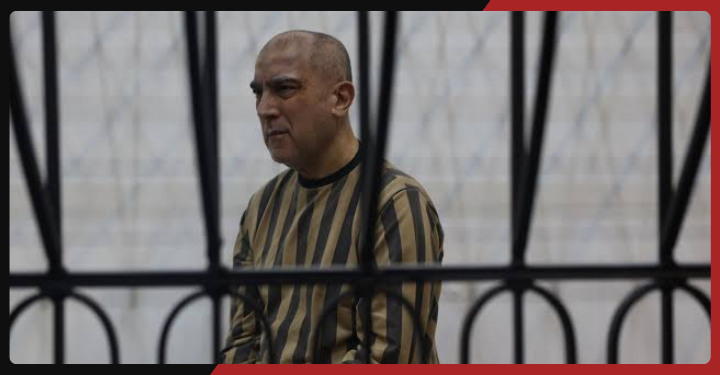
The trial of Najib opened publicly in Damascus in April 2026. He was detained and brought before the Fourth Criminal Court, while Bashar al-Assad and other senior former officials were listed as absent defendants.
Earlier hearings reportedly attracted relatives of people killed or tortured during Najib’s tenure in Daraa. Their participation gave the proceedings a highly emotional dimension.
For families who had spent years living with uncertainty, seeing a former senior official before a court represented a profound change.
The trial also raises difficult questions about what happens to former authoritarian systems after they collapse. A new government may have political reasons to prosecute former leaders, but courts must establish evidence and individual responsibility if their judgments are to be considered legitimate.
That is particularly important in cases involving crimes against humanity and war crimes, where legal standards can be complex.
The Syrian Network for Human Rights has previously warned about several legal challenges in the Najib case, including the legal framework, classification of crimes and procedural issues surrounding defendants who are not present.
These concerns will likely continue to shape discussion about the verdict.
The death sentence against Assad also creates a practical problem. Because he is in Russia, Syrian authorities cannot simply carry out the sentence. His case could therefore remain primarily symbolic unless there is a major change in his circumstances.
Najib’s position is different. He was arrested in Syria and appeared before the court in person. His case therefore offers a more immediate test of whether the new authorities will follow through on the punishment imposed by the judiciary.
The verdict also has consequences for Syria’s broader transition. Many citizens want justice for crimes committed under the Assad government, while others are concerned that prosecutions could deepen political divisions if they are perceived as victor’s justice.
A sustainable system will have to address both concerns.
The transformation from Assad’s presidency to his conviction demonstrates how quickly political power can change after the collapse of a regime. But the real measure of Syria’s transformation will not be the verdict alone.
It will be whether the country’s new institutions can establish consistent legal standards, investigate crimes impartially and give victims meaningful recognition.
For now, the death sentence represents a powerful symbol of the end of Assad’s political era. The next challenge is turning that symbolic moment into a broader and credible system of justice.