The Karnataka Congress government is facing renewed political turbulence after a recent Cabinet reorganisation sparked widespread dissatisfaction among party legislators. What was intended to strengthen the administration and bring fresh momentum to governance has instead intensified internal power struggles, resulting in the resignation of two Congress MLAs and increasing concerns about further dissent within the ruling party. The unfolding developments have placed the state leadership under pressure to preserve unity while maintaining political stability.
The Cabinet reorganisation was announced after extensive deliberations between the Karnataka leadership and the Congress high command. The exercise aimed to balance regional representation, reward experienced legislators, and improve the efficiency of the government. However, the final list of ministers disappointed several lawmakers who believed they deserved Cabinet positions after contributing significantly to the party’s electoral victory.
The resignation of two Congress MLAs has become the most visible consequence of the Cabinet reshuffle. Both legislators expressed disappointment with the leadership, alleging that the selection process lacked fairness and transparency. They argued that several senior leaders who had remained loyal to the party for years were ignored in favour of others, creating frustration among party workers and elected representatives alike.
Their decision has encouraged speculation that additional legislators could express their dissatisfaction if the leadership does not address their grievances. According to political observers, several Congress MLAs have privately voiced concerns over the allocation of ministerial portfolios and the overall decision-making process. While many have not openly challenged the leadership, reports suggest that discussions among dissatisfied lawmakers are continuing behind closed doors.
Chief Minister Siddaramaiah has appealed to party members to remain united during this challenging period. He emphasized that Cabinet formation is always a difficult exercise because constitutional provisions restrict the number of ministers that can be appointed. The Chief Minister stated that every legislator’s contribution is valued and urged colleagues to prioritize the welfare of Karnataka over personal ambitions.
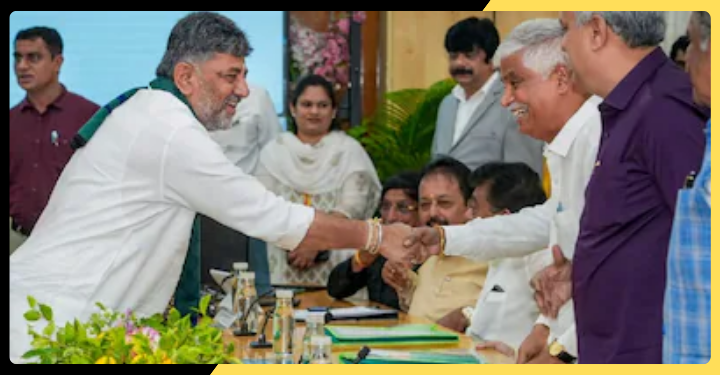
Deputy Chief Minister D.K. Shivakumar has also sought to calm tensions by holding discussions with dissatisfied legislators. He reiterated that the Congress has a tradition of resolving internal differences through dialogue and democratic consultation. According to Shivakumar, the party leadership remains committed to recognizing the efforts of all legislators through future opportunities in governance and organizational responsibilities.
The Congress high command has reportedly become actively involved in managing the situation. Senior leaders from New Delhi are closely monitoring developments and are believed to be in constant communication with Karnataka’s top leadership. Sources indicate that efforts are underway to convince disgruntled legislators that their concerns will be addressed through future Cabinet adjustments, party appointments, and greater involvement in policymaking.
Meanwhile, the opposition Bharatiya Janata Party (BJP) has sharply criticized the Congress government, claiming that the Cabinet reorganisation has exposed serious internal divisions. BJP leaders argue that the ruling party is struggling to balance competing factions and has become distracted by internal power struggles instead of focusing on governance. They contend that political instability could delay administrative decisions and affect the implementation of development projects across Karnataka.
Political analysts believe that such situations are not uncommon in Indian politics. Cabinet expansions and reshuffles often create expectations among legislators, many of whom hope to receive ministerial responsibilities after contributing to the party’s success. However, constitutional limitations on the size of the Cabinet mean that many deserving leaders inevitably remain outside the government. Managing these expectations requires careful political negotiation and effective leadership.
The current controversy has also shifted public attention away from governance. Karnataka continues to face several pressing challenges, including infrastructure development, employment generation, industrial investment, agricultural reforms, urban planning, and the implementation of welfare programmes. Experts warn that prolonged internal conflict could reduce administrative efficiency and undermine public confidence in the government’s ability to deliver on its promises.
Despite the unrest, several senior Congress leaders remain optimistic that the situation can be resolved peacefully. They point out that the party has experienced similar episodes in the past and has successfully restored unity through dialogue and organizational adjustments. However, they acknowledge that swift intervention is essential to prevent dissatisfaction from spreading further among legislators.
Political commentators believe the coming days will be crucial for the future of the Karnataka Congress. Meetings between the state leadership, the high command, and dissatisfied MLAs are expected to determine whether the crisis remains manageable or develops into a larger political challenge. If the leadership succeeds in rebuilding trust and accommodating concerns, the government could quickly return its focus to governance. On the other hand, additional resignations or prolonged factional disputes could weaken the party’s image and provide the opposition with fresh political opportunities.
For the Congress government, the Cabinet reorganisation has become more than an administrative exercise—it has evolved into a major test of leadership, political management, and organizational unity. How the party responds to the growing unrest will shape not only its internal stability but also its ability to govern effectively in the months ahead.