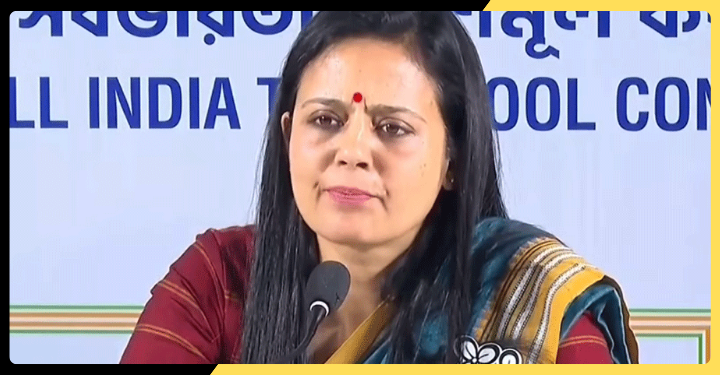
Trinamool Congress (TMC) leader Mahua Moitra has reaffirmed her support for West Bengal Chief Minister Mamata Banerjee, describing her as the central figure behind the party’s success and continued relevance in Indian politics. Moitra’s remarks come amid discussions about leadership within regional political parties and the future course of the Trinamool Congress as it seeks to strengthen its position both within West Bengal and beyond.
According to Moitra, Mamata Banerjee remains the heart of the Trinamool Congress, serving as the leader who has shaped its ideology, organizational culture, and political direction. Her statement reflects a broader view within the party that Banerjee’s leadership continues to be the foundation upon which the TMC has built its identity and public credibility.
The Trinamool Congress was established in 1998 when Banerjee decided to break away from the Indian National Congress. At that time, West Bengal’s political landscape was dominated by the Left Front, which had been in power for decades. Many political observers viewed the formation of the TMC as a risky political move. However, Banerjee’s determination and grassroots approach gradually transformed the party into a major political force.
Over the following years, Banerjee focused on connecting directly with voters, raising issues related to governance, development, and public welfare. Her ability to mobilize support across different sections of society enabled the party to expand rapidly. The TMC’s historic victory in the 2011 West Bengal Assembly elections marked a turning point, ending the Left Front’s long rule and establishing Banerjee as one of India’s most influential regional leaders.
Moitra’s recent comments highlight the significance of that journey. She suggested that the trust people place in the Trinamool Congress is closely linked to the trust they place in Mamata Banerjee herself. For many supporters, Banerjee represents the values and aspirations that the party seeks to promote.
Political analysts frequently emphasize the importance of leadership in shaping a party’s public image. While policies and organizational structures are essential, charismatic leaders often become symbols of political movements. In the case of the TMC, Banerjee’s leadership has become inseparable from the party’s political identity.
Mahua Moitra has emerged as one of the party’s most prominent voices on the national stage. Through her speeches, debates, and public engagements, she has consistently defended the TMC’s positions and articulated its perspectives on major issues. Her endorsement of Banerjee’s leadership therefore carries considerable significance within political circles.
Observers note that public expressions of loyalty from senior leaders often serve multiple purposes. They reinforce unity within the party, reassure supporters, and counter narratives that suggest internal divisions. By emphasizing Banerjee’s central role, Moitra projected an image of stability and continuity at a time when political parties across the country are facing increased scrutiny regarding leadership and succession.
Banerjee’s appeal extends beyond traditional political considerations. Her supporters often point to her simplicity, accessibility, and direct engagement with ordinary citizens as key reasons for her popularity. Over the years, she has cultivated an image of a leader who remains closely connected to grassroots concerns despite holding one of the highest political offices in the state.
The Trinamool Congress has expanded significantly since its inception. While West Bengal remains its primary base, the party has sought to increase its national profile and participate more actively in broader political discussions. Throughout this process, Banerjee’s leadership has provided both direction and visibility, helping the party maintain a distinct identity in an increasingly competitive political environment.
Moitra’s remarks also draw attention to the historical relationship between the party and its founder. Unlike many political organizations that evolve around collective leadership structures, the TMC’s growth has been closely associated with Banerjee’s personal political journey. Her struggles, victories, and public image have become integral parts of the party’s narrative.
As future elections approach, the Trinamool Congress will continue to face challenges from political opponents and changing voter expectations. Maintaining organizational cohesion and public confidence will be critical to its success. In this context, leaders like Moitra believe that Banerjee’s experience and leadership remain valuable assets for the party.
The statement also serves as a reminder of the enduring influence that strong leadership can have in democratic politics. For the TMC, Mamata Banerjee is more than a party president or chief minister. She is widely regarded as the figure who transformed a regional movement into a dominant political force and continues to inspire its supporters.
Ultimately, Mahua Moitra’s comments underscore the belief that Mamata Banerjee remains the heart of the Trinamool Congress. Her leadership has shaped the party’s past achievements, guides its present strategy, and is expected to play a defining role in its future ambitions. As the political landscape continues to evolve, Banerjee’s influence within the TMC remains as strong as ever.