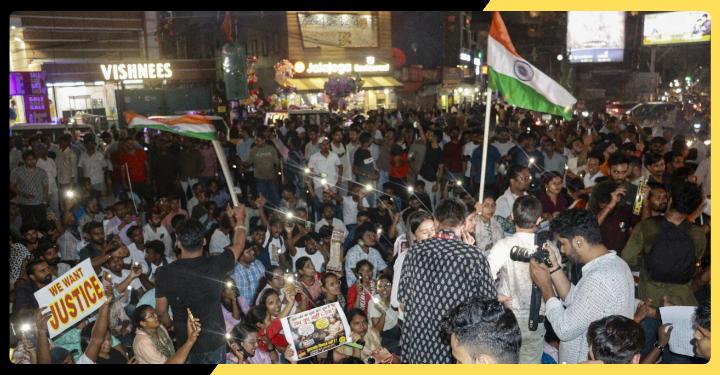
The student-led protest in Ranchi entered its sixth consecutive day, with demonstrators showing no signs of backing down as they continued their peaceful sit-in. Over the past week, the agitation has evolved from a local campus issue into a statewide discussion on youth participation, democratic rights, and government accountability. The arrival of representatives from the Cockroach Janta Party (CJP), who publicly backed the movement, further amplified attention on the protest and added a new dimension to the ongoing developments.
From the morning hours, hundreds of students gathered at the protest venue carrying banners, placards, and national flags. Many participants said they had joined because they wanted their concerns to be heard through democratic means. Slogans demanding dialogue, transparency, and timely action echoed across the venue, while volunteers ensured the availability of food, drinking water, and medical assistance for those participating in the prolonged demonstration.
Organizers described the protest as a peaceful campaign aimed at securing constructive engagement with the authorities. Student leaders repeatedly appealed to participants to remain calm and disciplined, emphasizing that violence or vandalism would only weaken the movement’s credibility. The protest site reflected a spirit of unity, with students from multiple colleges and universities standing together despite differences in academic backgrounds and personal opinions.
One of the key developments during the day was the visit by CJP leaders. Addressing the gathering, they praised the students for maintaining a peaceful protest and asserted that every citizen has the constitutional right to express concerns through democratic means. They urged the government to begin talks with student representatives instead of allowing the situation to continue without a formal response.
While thanking the party for its support, student representatives clarified that the agitation remained independent and would continue to be led solely by students. They stated that the protest was not linked to any political organization and that its demands would remain focused on issues affecting the student community. According to organizers, support from different groups is welcome as long as it does not alter the movement’s non-partisan character.
Police maintained a significant security presence around the demonstration site to ensure law and order. Barricades were placed at strategic locations, and officers coordinated traffic movement to minimize inconvenience for commuters. Authorities confirmed that the protest had remained peaceful throughout the day and encouraged demonstrators to continue cooperating with law enforcement personnel.
The movement has also gained considerable traction online. Videos of speeches, peaceful marches, and cultural performances organized by students have circulated widely across social media platforms. Several hashtags related to the protest trended locally, drawing attention from users across the country. Many people praised the students’ discipline, while others urged authorities to initiate dialogue before the agitation extended further.
Political analysts believe the protest has become a significant example of youth participation in public affairs. They argue that prolonged, peaceful demonstrations often encourage wider public engagement and place greater pressure on governments to respond through dialogue. At the same time, observers note that maintaining unity and discipline will be essential if the movement is to retain public confidence.
As the sixth day concluded, student leaders announced that the sit-in would continue until meaningful discussions were initiated. They expressed hope that the administration would recognize the seriousness of the situation and engage with representatives in a constructive manner. With increasing support from citizens, social organizations, and political groups, the Ranchi protest continues to gain momentum, emerging as one of the most prominent youth-led movements in the state in recent times.