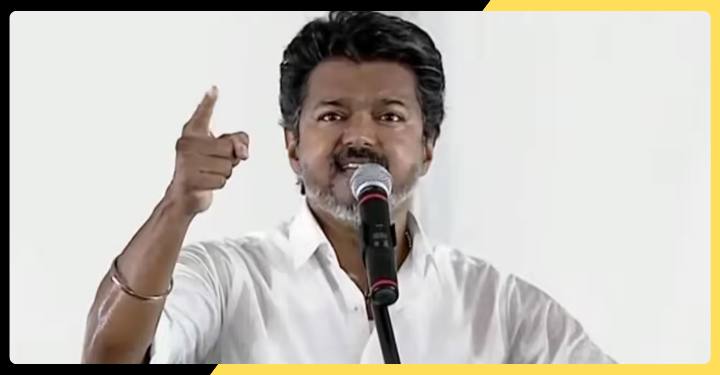
Tamil Nadu woke up to a political surprise on counting day as actor Vijay’s Tamilaga Vettri Kazhagam (TVK) delivered a stunning performance in the 2026 Assembly elections, reshaping the state’s long-established political order. What was expected to be a familiar contest between the ruling DMK and the AIADMK-led opposition quickly transformed into a historic breakthrough for Vijay, whose party emerged as the biggest talking point across the state.
As early trends came in from constituencies across Tamil Nadu, TVK began leading in dozens of seats, surprising political analysts and rival parties alike. By afternoon, the party had crossed key milestones, with supporters claiming that the “Vijay Wave” had become a full-fledged political movement. The ruling DMK, which entered the election with confidence after five years in power, suddenly found itself pushed onto the defensive in several traditional strongholds.
The rise of TVK marks a dramatic turning point in Tamil Nadu politics, a state historically dominated by Dravidian parties for more than half a century. Vijay’s campaign successfully tapped into growing frustration among young voters, unemployed graduates, and sections of the middle class seeking an alternative to conventional politics. His rallies drew massive crowds throughout the campaign, often resembling blockbuster film events more than traditional political meetings.
Throughout the election campaign, Vijay positioned himself as a leader focused on transparency, youth empowerment, and systemic reform. He repeatedly attacked both the DMK and AIADMK, accusing them of failing to address unemployment, corruption, and governance challenges. Political observers now believe that this anti-establishment messaging resonated strongly with first-time voters and urban populations.
One of the most dramatic moments of the day came when reports suggested Chief Minister M.K. Stalin was trailing in Kolathur during the initial rounds of counting. Though margins shifted as counting progressed, the symbolism of the development reflected the scale of TVK’s impact across the state.
The AIADMK-BJP alliance, meanwhile, struggled to emerge as the principal opposition force. While the alliance hoped to benefit from anti-incumbency against the DMK government, much of that sentiment appears to have consolidated behind Vijay’s party instead. Analysts suggest TVK succeeded in presenting itself as the only credible alternative capable of challenging the established political order.
A major factor behind TVK’s rise has been its organizational model. Vijay’s vast network of fan clubs, built over decades of cinema popularity, transformed into an efficient political structure during the election. Volunteers coordinated booth management, digital campaigns, voter outreach, and social media mobilization on a scale rarely seen for a first-time political party in Tamil Nadu.
Celebrations erupted outside TVK offices in Chennai, where supporters waved party flags, burst crackers, and chanted slogans declaring Vijay as the “next big force” in Tamil Nadu politics. Social media platforms were flooded with hashtags celebrating the “Vijay Effect,” with many comparing his political rise to iconic actor-politicians of the past.
Even before the final results are declared, the 2026 Assembly election has already changed Tamil Nadu’s political narrative. Vijay’s TVK has moved from outsider status to the centre of state politics in a remarkably short period. Whether or not the party ultimately forms the government, one reality has become undeniable: Tamil Nadu politics has entered a completely new era, and Vijay now stands at the heart of it.