
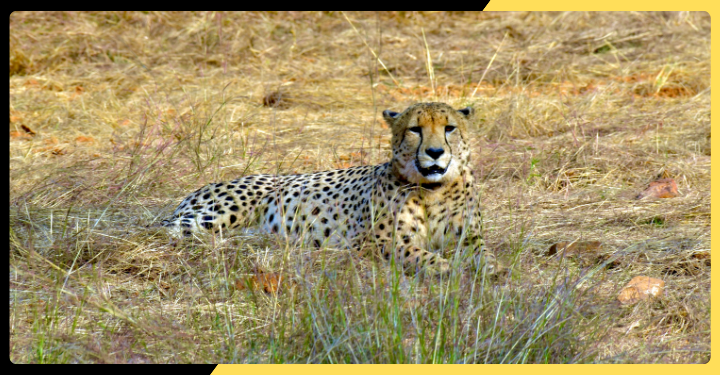
Wildlife conservation efforts in India suffered a major shock after four cheetah cubs were found dead inside Kuno National Park. The cubs were barely a month old and had recently become a symbol of hope for India’s ambitious Project Cheetah programme.
Officials confirmed that the cubs belonged to a female cheetah imported from Africa under the government’s wildlife restoration initiative. Their birth had generated excitement among conservationists who viewed it as an important step toward establishing a breeding population in India.
The cubs were reportedly discovered during a field monitoring exercise carried out by forest personnel. Veterinary experts were immediately informed, and investigations into the cause of death have begun.
Although authorities have not yet released a final report, early assessments suggest that environmental stress and extreme summer heat may have contributed to the tragedy. Wildlife specialists note that young cubs are highly vulnerable during their first few weeks of life.
The deaths have reignited debate over the suitability of Indian conditions for cheetah conservation. While the species once roamed Indian grasslands, decades of ecological change have altered habitats considerably.
Project Cheetah was launched with international collaboration and was hailed as one of the world’s most ambitious wildlife reintroduction efforts. The project involved bringing cheetahs from Namibia and South Africa to India after the species was declared extinct in the country in 1952.
Despite its global attention, the programme has faced criticism due to several cheetah deaths since its launch. Experts have questioned habitat size, prey availability, climate adaptation, and veterinary preparedness.
Supporters of the project insist that wildlife conservation is inherently unpredictable and that setbacks are common during the establishment phase of a species. They emphasize that breeding activity indicates positive adaptation trends despite recent losses.
The incident has also drawn attention to the broader challenges of conservation in an era of climate change. Rising temperatures and unpredictable weather patterns are increasingly affecting wildlife populations across the world, making species restoration efforts even more difficult.
Officials at Kuno National Park have assured that all remaining cheetahs are under continuous observation. Surveillance teams equipped with radio tracking systems are reportedly conducting frequent health checks and monitoring movement patterns.
Wildlife activists have demanded a transparent review of the project to identify gaps and recommend corrective measures. Some conservationists have suggested involving more international experts with experience in cheetah ecology and rehabilitation.
Local communities around Kuno expressed disappointment after hearing about the deaths. Many residents had embraced the cheetah project as a source of regional pride and economic opportunity through tourism.
Even with the setback, authorities remain committed to continuing the initiative. Government officials say conservation success cannot be measured through isolated incidents alone and that the programme’s long-term ecological goals remain unchanged.
The deaths of the four cubs, however, serve as a powerful reminder of the difficulties involved in restoring endangered species and the constant challenges faced by conservation programmes worldwide.