
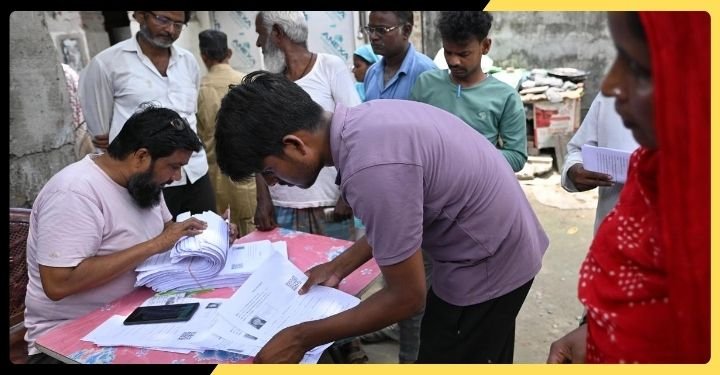
The Supreme Court has upheld the Special Intensive Revision (SIR) exercise, describing it as a necessary initiative aimed at strengthening the integrity of India’s electoral system. The landmark judgment has reinforced the constitutional authority of the Election Commission of India (ECI) to conduct voter verification drives in order to maintain accurate and transparent electoral rolls.
The apex court observed that democracy depends on the credibility of elections and that credible elections are impossible without reliable voter databases. According to the bench, periodic revision exercises are essential in a country as vast and dynamic as India, where migration, deaths, and changes in residence frequently impact voter records.
The SIR exercise had become the subject of intense political and legal debate after petitions were filed challenging its implementation. Critics argued that strict documentation procedures could create barriers for poor and marginalized citizens, especially migrant workers and people living in rural areas. Petitioners claimed that genuine voters could face the risk of exclusion due to administrative errors or lack of proper paperwork.
However, the Supreme Court clarified that the objective of the exercise was not to deprive citizens of their voting rights but to ensure the authenticity of electoral rolls. The judges emphasized that fake, duplicate, or outdated entries can weaken democratic institutions and reduce public trust in election outcomes.
The court further stated that the Election Commission has a constitutional duty to maintain the purity of elections. It observed that the Commission cannot effectively perform its responsibilities without conducting regular verification exercises. The judges described electoral roll accuracy as a “cornerstone of democratic governance.”
At the same time, the court stressed the importance of procedural fairness. Authorities were directed to ensure that citizens are given adequate notice, clear guidelines, and sufficient opportunities to correct discrepancies or challenge wrongful deletions. The bench underlined that transparency must remain central to the entire revision process.
Following the judgment, the Election Commission welcomed the decision and called it a strong endorsement of institutional reforms. Officials said the exercise was designed to identify duplicate names, deceased voters, and ineligible registrations while ensuring that legitimate voters remain protected.
Political reactions were sharply divided. Leaders from the ruling side praised the verdict as a victory for democratic accountability and clean elections. Opposition parties, however, maintained that the implementation process must be carefully monitored to avoid misuse or selective targeting.
Legal experts believe the judgment could have long-term implications for future electoral reforms in India. Analysts say the ruling strengthens the Election Commission’s authority while simultaneously imposing responsibility on officials to maintain fairness and accountability during implementation.
The Supreme Court also highlighted the importance of voter awareness. The judges said public participation is crucial for the success of any electoral revision exercise. Authorities were encouraged to conduct awareness campaigns so that citizens understand verification procedures and timelines.
Experts noted that many democracies across the world conduct periodic voter verification to preserve electoral integrity. India’s large population and complex electoral structure make such exercises challenging but necessary. According to analysts, accurate voter rolls reduce the possibility of electoral disputes and strengthen confidence in democratic outcomes.
As political parties prepare for future elections, the Supreme Court’s endorsement of the SIR exercise is expected to remain a key topic in discussions around electoral reforms and democratic accountability. The ruling has effectively highlighted the balance between electoral integrity and the protection of citizens’ voting rights.