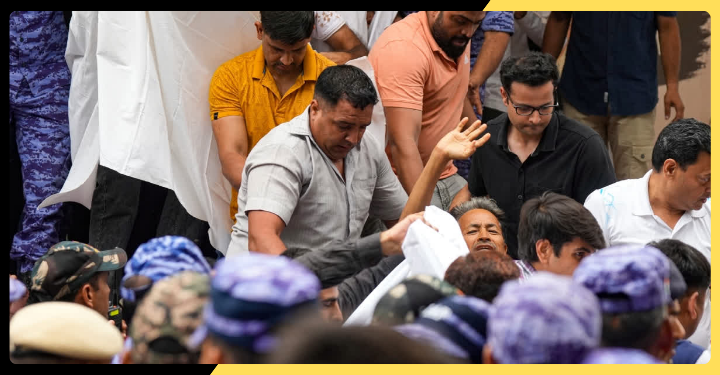
The hospitalization of climate activist and education reformer Sonam Wangchuk has led to renewed attention on the ongoing protest at Jantar Mantar in New Delhi. Following his transfer to Safdarjung Hospital after concerns about his health during an extended hunger strike, reports emerged that a representative associated with the protest announced plans to continue the movement through an indefinite fast.
According to media reports, the announcement was made shortly after Wangchuk was admitted to the hospital. Protest organizers said the decision was intended to ensure that the campaign continued despite Wangchuk’s absence from the protest site. Supporters gathered outside the venue expressed solidarity with the movement and reiterated their commitment to peaceful demonstrations.
Wangchuk had been observing an indefinite hunger strike to draw attention to issues raised by the protest. His participation attracted nationwide attention because of his long-standing work in education, sustainable development, and environmental advocacy. Over the course of the protest, students, activists, and members of civil society joined the demonstrations, calling for dialogue and action on the movement’s demands.
Medical officials recommended Wangchuk’s hospitalization after monitoring his health during the prolonged fast. Doctors stated that extended fasting can result in dehydration, weakness, electrolyte imbalance, and other complications that require close medical supervision. Hospital authorities said he would remain under observation while receiving appropriate treatment.
The transfer to the hospital prompted mixed reactions. Authorities maintained that the move was taken solely on medical advice and in the interest of protecting Wangchuk’s health. Meanwhile, several supporters questioned the circumstances surrounding his removal from the protest site and called for greater transparency.
The continuation of the hunger strike by another protest representative reflects the determination of organizers to keep public attention focused on their demands. Demonstrators stated that the movement would remain peaceful and would continue through constitutional and democratic means.
Political leaders from different parties also responded to the developments. Some called on the government to engage directly with protest representatives, while others emphasized the importance of ensuring the safety and health of all participants. Government officials reiterated that medical care was the immediate priority after doctors expressed concern about Wangchuk’s condition.
Legal experts and civil society observers noted that peaceful protests and hunger strikes have long been part of India’s democratic traditions. At the same time, they stressed that authorities have a responsibility to intervene when there is a serious risk to a protester’s life or health. Balancing the right to protest with the duty to protect life remains an important challenge in such situations.
Supporters continued gathering outside the hospital and at the protest site, holding placards, chanting slogans, and urging the government to begin discussions with protest representatives. Volunteers appealed for calm and encouraged participants to maintain the peaceful nature of the movement.
As events continue to unfold, attention remains focused on Wangchuk’s recovery and the future direction of the protest. Any further developments, including changes in leadership, negotiations, or official statements, are expected to shape the next phase of the movement. Observers say the coming days will be crucial in determining whether dialogue between the protesters and the authorities can help resolve the issues raised during the demonstration.